
The Concept Of Abacus Education
📅 14 Sep, 2013 · ✍️ Admin
Last updated: 30 September 2026
The Concept & Benefits of Abacus Learning Children
This write-up will discuss the concept & benefits of Abacus learning in children. The benefits of Abacus learning for children of early ages is a hot topic under discussion among the education fraternity. In the modern era, the Abacus is considered more of a brain development tool that enhances the abilities like Visualization, Listening, Logical Reasoning, Memorizing, and Recalling, rather than only a calculating device.
However, many of us would not know about the effects of an Abacus in real life. Let us understand what effects it has on an individual's daily routine.
Abacus Learning - The Concept
Abacus is a tool used for a manual calculation. The process involves moving beads on the Abacus tool per the requirement of the digit value & the Arithmetic operators involved.
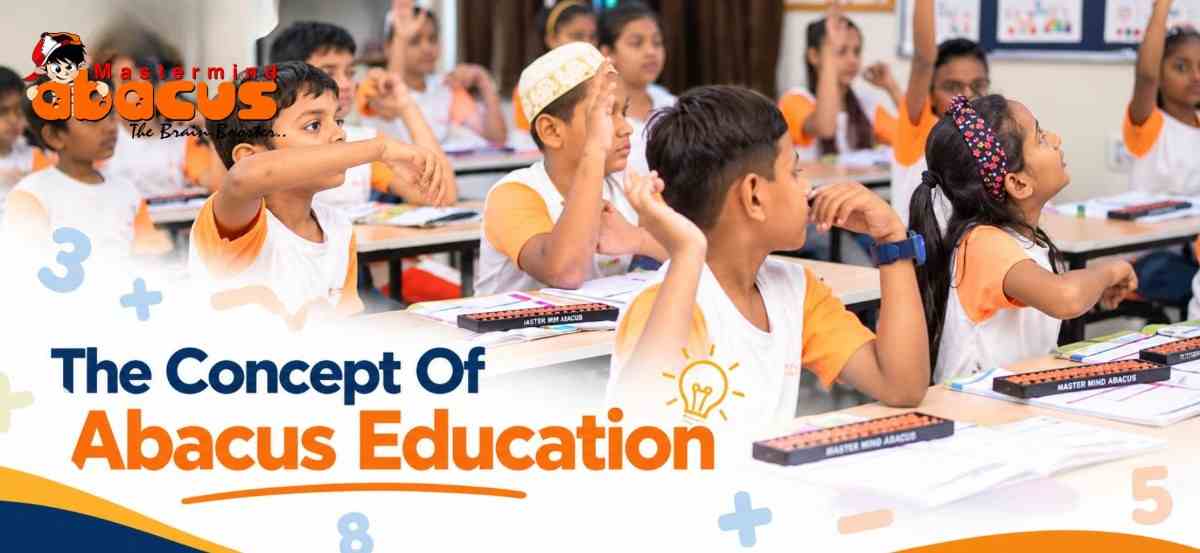
The movement of the beads is done with both hands according to the preset rules of the Abacus. Using both hands activates the left and right hemispheres of the child's brain, thus promoting whole-brain development. The use of the physical Abacus tool is abandoned over a period during the training; instead, the trainee visualizes the Abacus tool and moves the beads mentally on the imaginary Abacus.
By the time the training is completed, the children develop the ability to concentrate, listen carefully, visualize, have sharper visual memory & accurate recall, have logical thinking ability, & are more confident. They learn to perform mental math calculations quickly and accurately, often without writing down a single step. Their confidence is also reflected in their improved performance in their Academics.
How Abacus Training Moves From Beads To Visualization
Parents often ask how a child moves from touching beads to solving sums in the mind. It does not happen in one jump. At Mastermind Abacus the course runs over 10 levels of about three months each, with two one-hour classes a week, and the shift from the physical tool to the imaginary one is built into that journey stage by stage. You can read more about how this is taught in our Mastermind method of abacus teaching, and see the parts of the tool itself in our post on the structure of the abacus.
| Stage of learning | What the child works with | What practice looks like | What starts to change |
|---|---|---|---|
| Getting friendly with the tool | Physical abacus | Learning bead values, place value and correct finger movement | Numbers begin to feel like objects, not symbols |
| Two-hand bead work | Physical abacus | Addition and subtraction using both hands together | Hand-eye coordination and sustained attention |
| Picturing the beads | Abacus kept aside for some sums | Solving easy sums by imagining the rods instead of touching them | Visualization starts replacing the tool |
| Listening and answering | Imaginary abacus | Numbers are read out and the child answers mentally | Listening skill, recall and speed |
| Bigger numbers, mixed operations | Imaginary abacus | Multiplication, division and longer mixed sums | Logical thinking and confidence with numbers |
| Keeping the skill alive | Daily practice at home | Short regular practice, including on our virtual abacus | The skill stays usable long after the course |
Other Benefits of Abacus Training
These acquired abilities transform into several other benefits lasting a lifetime. Let us enlist and discuss.
1. Conceptualization
It is observed that those who learn to use the Abacus instrument and train themselves on reacting to sight, sound, and hand (or finger) movements develop a strong ability to conceptualize events and situations. It is not necessarily applicable in studies but also in day-to-day activities. Abacus studies help relate incidents to develop a better understanding that lasts longer (probably for a lifetime).
2. Intellect
Children who train regularly on the Abacus often get better at breaking a problem into steps, analyzing it and planning their next move before they start. Studies on mental arithmetic training report gains in working memory and attention, though how much each child gains varies. What parents usually notice first is that their child stops panicking at a difficult sum and starts thinking it through.
3. Futuristic Approach
Abacus-trained students often develop the habit of thinking a step ahead instead of reacting to what is in front of them. Planning every calculation in advance slowly becomes a way of approaching other situations too. They can strategize future tactics for studies, the workplace, or elsewhere. It gives them an extra edge over others.
4. Judgment
The training on Abacus instruments develops a strong ability to judge and scrutinize minute things and make critically significant and effective decisions. Most people need help to make sound decisions. A fine-tuned judgment can help them make relevant decisions with more confidence and satisfaction.
5. Alertness
Most of us in the past have made silly mistakes because of our carelessness. Abacus study helps reduce this habit and makes a child more alert in grasping things quickly. Over time, many Abacus learners become noticeably more attentive, quicker to respond and more present in what is going on around them.
Many more effects can be observed in the students who use Abacus and have undergone quality training through skilled professionals and reputed Abacus institutes.
Frequently Asked Questions
Is the abacus only an old calculating tool, or does it teach something more?
The tool itself is centuries old, but in a modern class it is used as a brain training device. The child is not learning to calculate on beads for life; the beads are used to build visualization, concentration and recall. You can read more on what an abacus is and how it is used today.
Why do children stop using the physical abacus during the course?
Because the real goal is mental calculation. Once a child can move the beads correctly and quickly, the tool is gradually withdrawn so the same movements happen on an imagined abacus. The physical abacus is the trainer, not the destination, and this shift is planned level by level.
Does the bead-to-visualization process work the same way in online classes?
Yes. Children in live online classes use the same physical abacus kit at home, follow the same level structure and do the same listening and visualization practice with a teacher watching them on screen. The teacher can see the child's hands and correct finger movement just as in a classroom.
Will abacus practice confuse my child with the method taught in school?
It usually does not. School teaches written methods, while the abacus teaches a mental route to the same answer. Children learn to use whichever method the question demands, and many start checking their school answers mentally before they hand the paper in.
How long does the full abacus course take to complete?
The Mastermind Abacus programme has 10 levels, and each level runs for about three months with two one-hour classes a week. Children who practise regularly at home move through the levels comfortably. The exact pace depends on the child's age, attendance and practice.
Our child is 6. Is this the right time to begin the abacus course?
Yes, the abacus programme is designed for ages 6 to 14, so six is a good starting point. For younger children we run Lingo Bingo for ages 5 to 6 at our offline centres, which builds early number readiness before abacus training begins.
Does abacus learning help only in maths?
Maths is where the change shows first, because the practice is built on numbers. But the habits behind it, such as listening carefully, holding information in the mind and finishing a task without distraction, are used in every subject. Many parents report steadier reading and writing work too.
You can enroll your child in an Online Abacus Class by Mastermind Abacus if you want your child to avoid going to an Abacus class some distance. The curriculum, teaching method and practice material are the same in our Abacus online classes and offline classes.
Book a free demo for a better understanding of our classes & teaching standards.
Also Read: Abacus Class and Its Future Advantages For Kids
Author – Mr. Naveen Chowdhari
Naveen Chowdhari is the Founder & Director of Mastermind Abacus, a leading name in children’s mental math and brain development training. By blending traditional abacus methods with modern teaching techniques, he has created an innovative system that enhances children’s concentration, memory, visualization, speed, and overall cognitive skills. Under his leadership, Mastermind Abacus now provides worldwide online abacus classes and has built a strong global franchise network, making quality brain-development education accessible across the world.
Last Updated: 30 September 2026