

Parenting Tips For Primary School Kids
📅 27 Mar, 2023 · ✍️ Admin
Last updated: 21 September 2026
As parents, we all want our children to be successful and confident during their primary school years. These formative years are crucial for building a strong foundation for learning and development. Here are some parenting tips for primary school kids that parents can use to support their children during these early growing years:
1. Nurture Their Curiosity :-
Children are naturally curious. This is an opportunity for parents to nurture this natural instinct and arouse their interest in the world around them. Encouraging them to explore, ask questions, and discover new things further develops this quality and helps them become observant and fast learners as they grow. Introduce them to reading, writing, and math activities, but make sure they enjoy it and it is not a burden for them.
2. Introduce Them To Routines In Their Daily Activities :-
Setting a consistent schedule for homework, meals, and bedtime can help your child feel more in control and less stressed. Children, once introduced to fixed routines, find it easy to manage their time and learn discipline.
3. Participate and Make Physical Activities A Part of Their Routine :-
It goes without saying that regular exercise is important for children's physical and mental health. Motivate them to participate in a variety of sports, activities, and games. If needed, become a part of the activity yourself. Children often learn best by emulating adults.
4. Inculcate Good Habits :-
Lead by example. Small activities like brushing their teeth and washing their hands, dressing up by themselves and tying their shoelaces, will help them develop independence and make them responsible.
Putting the First Four Tips Into Practice
Tips work best when they turn into small, everyday actions. The table below shows what curiosity, routines, play and good habits can look like on a normal school day. Many of these habits also build the bigger life skills every child should develop before turning 13, such as independence and responsibility.
| Tip | What it looks like at home | A simple way to start this week |
|---|---|---|
| 1. Nurture curiosity | Your child asks “why” and “how”, and you explore the answers together. | Keep a “question of the day” at dinner and find one answer together. |
| 2. Daily routine | Homework, meals and bedtime happen at roughly the same time every day. | Put a simple written or picture timetable on the fridge. |
| 3. Physical activity | Active play or a sport is part of every day, not only weekends. | Plan one family walk, cycle ride or ball game this week. |
| 4. Good habits | Your child handles small self-care tasks without being reminded. | Pick one task, like packing the school bag, and let your child own it. |
5. Introduce The Abacus As A Tool For Learning :-
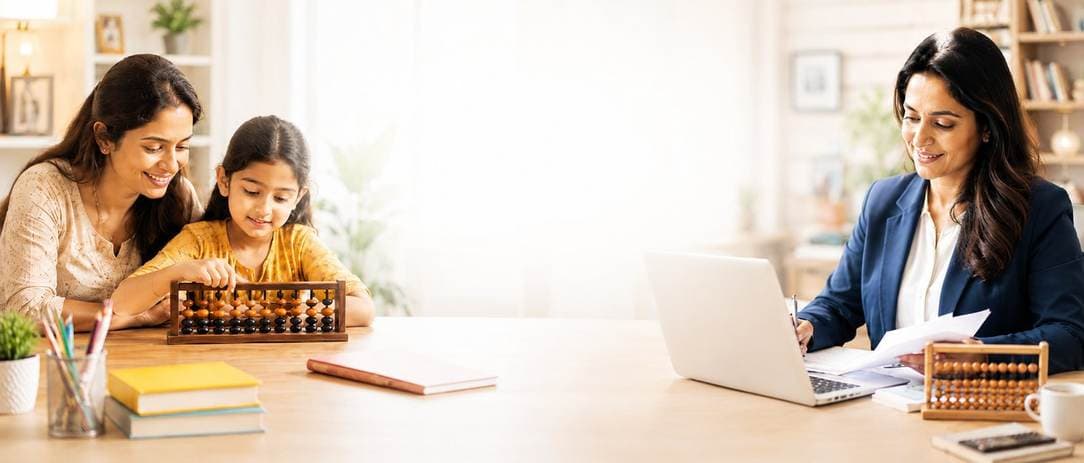
Introducing your child to an abacus class is a great idea. It is a powerful tool for developing children's cognitive skills. The abacus develops math skills and helps in developing their memory, concentration, and visualization abilities. Mastermind Abacus is one such program that provides a game-based abacus learning program with a comprehensive curriculum that helps children develop these skills.
6. Provide Positive Reinforcement :-
While pointing out faults and mistakes is important for disciplining children, praising them for their good actions is equally important. This acts as great positive reinforcement. Let them know how happy you are for their action. This helps them feel good about themselves and encourages them to continue to do well.
7. Parental Involvement In The Child's Education Is Important :-
You should be closely connected and informed about the progress of your child in school. You must know your child's teachers and what's happening in the classroom. Never miss attending parent-teacher meetings.
8. Do Not Set Unrealistic Goals :-
Know your child's strengths and weaknesses. Accordingly, set goals for your child. This is important to develop your child's confidence. Always extend a helping hand and use encouraging words to push them to achieve their goals. This is a helpful way to help children develop a positive attitude towards success.
Frequently Asked Questions
What is a good daily routine for a primary school child?
A good routine keeps wake-up, meals, homework, play and bedtime at roughly the same time every day. Include some active play, a short, fixed homework slot and a calm, screen-free wind-down before sleep. Keep it simple and predictable; children follow a routine better when they helped make it and can see it written down.
How much should I help my child with homework?
Help your child get started, then step back. Sit nearby, explain the task if they are stuck and check the finished work, but let them do the thinking and writing themselves. Doing homework for them may save time today, yet it takes away the practice and confidence they need for the next test.
How can I improve my child's concentration at home?
Start with short, focused tasks and grow them slowly. A regular bedtime, daily outdoor play and one fixed time for a single activity, such as reading or a puzzle, all help. For a step-by-step approach, see our guide on how to improve your child's attention span in 30 days without banning screens.
How do I praise my child without spoiling them?
Praise the effort and the action, not just the result. Saying 'You kept trying on that hard sum' teaches more than 'You are so smart'. Be specific, be honest and praise good behaviour soon after it happens. Balanced praise builds confidence, while correction of mistakes stays calm and clear.
At what age can my child join abacus classes?
The Mastermind Abacus program is designed for children aged 6 to 14, which covers the primary school years. It runs in 10 levels of 3 months each, with two 1-hour classes a week. Children can join live online abacus classes or learn at an offline centre.
How can I tell if I am setting unrealistic goals for my child?
Goals are unrealistic if your child is regularly stressed, avoids the task or feels they can never succeed. Look at where they are today and set the next small step, not the final result. If a difficulty persists despite steady effort, talk to their teacher first.
Let us all understand that although parenting is a natural instinct, it does require additional patience, love, and time when it comes to primary school children. You can give these tips a try as they are simple, practical habits that we have seen work for many families over the years.
When you decide to introduce an abacus as a tool for learning, contact Mastermind Abacus, which has been running abacus programs for children since 2005. You can opt for either an online abacus class or an offline abacus class from Mastermind.
Author – Mr. Naveen Chowdhari
Naveen Chowdhari is the Founder & Director of Mastermind Abacus, a leading name in children’s mental math and brain development training. By blending traditional abacus methods with modern teaching techniques, he has created an innovative system that enhances children’s concentration, memory, visualization, speed, and overall cognitive skills. Under his leadership, Mastermind Abacus now provides worldwide online abacus classes and has built a strong global franchise network, making quality brain-development education accessible across the world.
Last Updated: 21 September 2026