
What Is The Importance Of Teaching Mathematics In Primary School? Solutions and Strategies
📅 20 Feb, 2023 · ✍️ Admin
Last updated: 22 September 2026
Mathematics is a fundamental subject that plays a crucial role in shaping a child's cognitive development. It lays the foundation for higher-level Math and science and critical thinking skills essential for success in any field. In primary school, students are introduced to basic mathematical concepts: numbers, operations, geometry, and measurement. However, for many students, it can be a difficult and intimidating subject. This blog post will explore the importance of teaching math in primary school and some strategies and solutions to help students overcome anxiety and excel in the subject.
Why Is Mathematics Important In Primary School?
Math helps us understand and engage with the world, from everyday tasks such as managing money and following recipes to analyzing data and solving problems. It is a fundamental skill that is used in every aspect of life.
Math is the foundation for many other subjects. Science, engineering, and technology rely heavily on mathematical concepts and skills. A strong foundation in math will better prepare students for success in these subjects.
Students who struggle with math in primary school are more likely to struggle in later years. Providing students with a solid foundation in math can set them up for success in the long run.
Math is a subject that can be fun and engaging. By using hands-on activities, games, and real-world examples, students can enjoy learning it in a fun and meaningful way.
Strategies and Solutions For Teaching Mathematics In Primary School
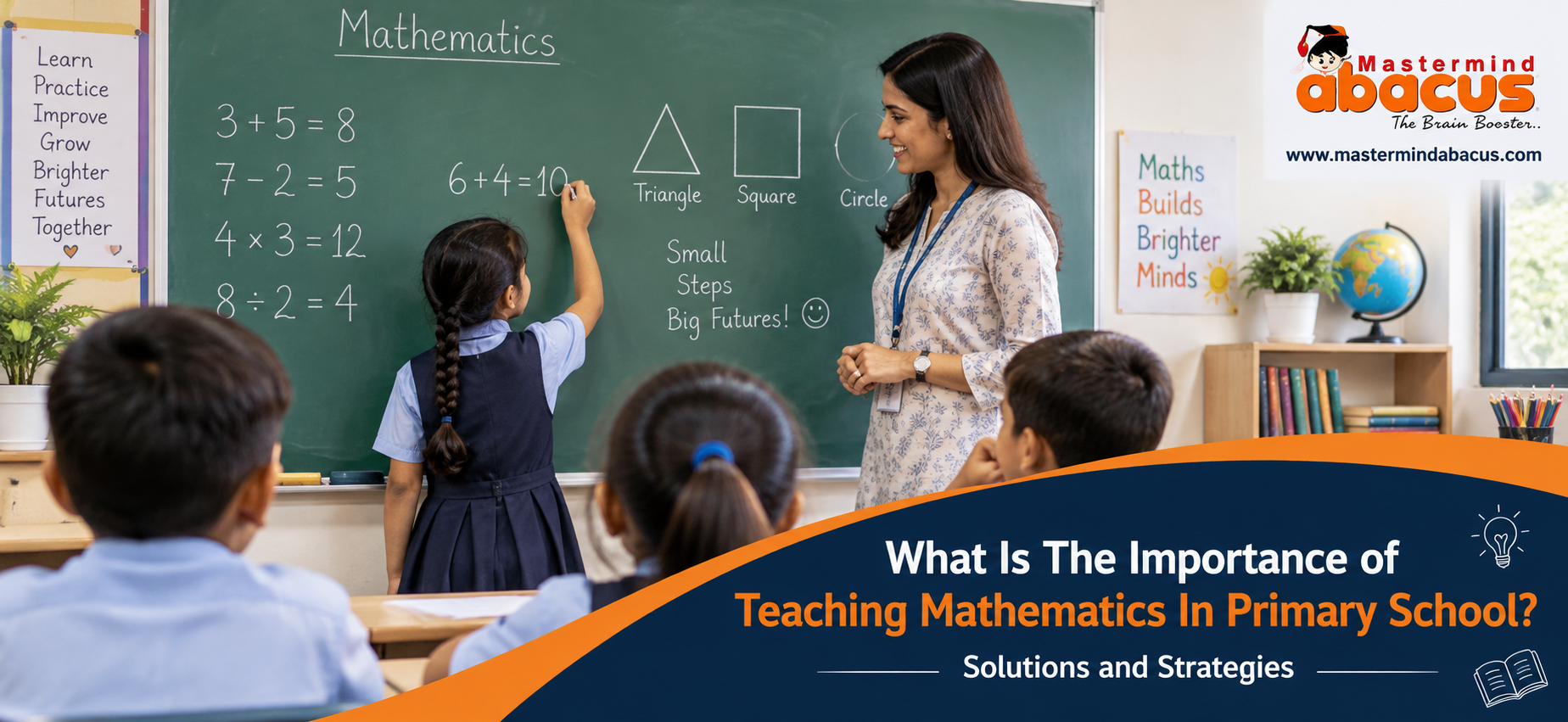
Use a hands-on approach. Activities and manipulation are a great way to help students understand mathematical concepts. Using real-world examples, students can see the relevance of numbers in their everyday lives.
Incorporate games and technology. Games and technology can make math more engaging and interactive. By using online resources, students can practice their numerical skills in a fun and interactive way.
Use a variety of teaching methods. Different students learn in different ways. Using various teaching methods, such as visual aids and verbal explanations, we can reach all students and help them understand the concepts.
Primary Math Classroom Strategy Checklist for Teachers
Teachers often ask how to turn these strategies into a simple daily routine. The checklist below shows what each strategy looks like in a real primary classroom and why it works. Because these early years shape how children think and learn, our guide on how early education shapes your child's cognitive growth explains why this stage matters so much.
| Strategy | What it looks like in class | Why it helps |
|---|---|---|
| Hands-on first | Children use counters, beads, blocks or an abacus before moving to written sums. | Numbers become concrete, so concepts are understood, not just memorised. |
| Real-world examples | Shopping lists, recipes, telling the time and measuring things in the classroom. | Students see why math matters in their daily lives. |
| Short number games | A quick game or quiz at the start or end of the lesson. | Keeps energy high and makes practice something children look forward to. |
| Mixed teaching methods | Visual aids, verbal explanation and guided practice in the same lesson. | Reaches children who learn in different ways. |
| Mental math warm-ups | Children picture numbers and solve small sums in their heads. | Builds number sense, focus and confidence. |
| Calm, regular practice | Brief daily practice instead of long, test-style sessions. | Reduces fear of mistakes and builds steady progress. |
Abacus Math
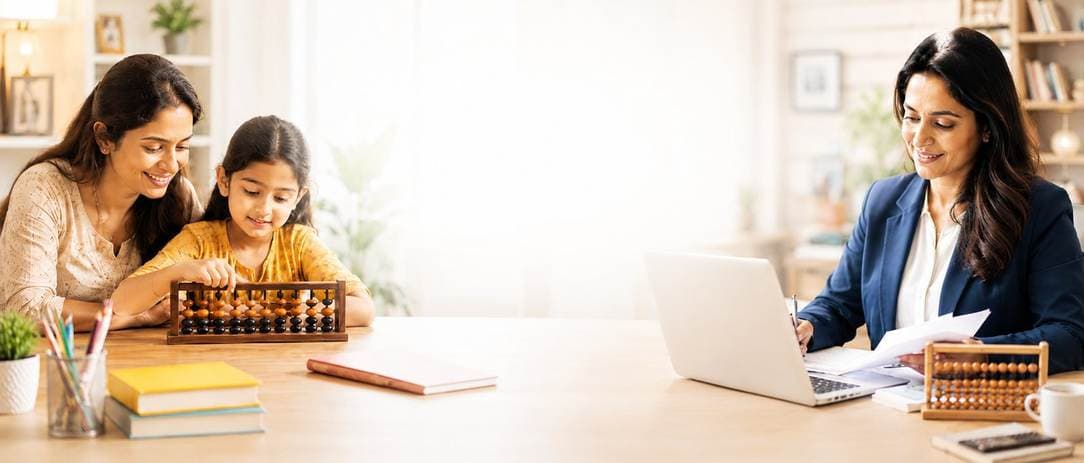
Abacus is an ancient technique that is still used today to teach math in a fun and engaging way. By using the Abacus tool to learn Math, students can visualize mathematical concepts and perform mental math with speed and accuracy. Using an Abacus is a great way to engage both logical and visual thinking (often described as the left and right brain), which can support better grades and an increased interest in numbers.
Mastermind Abacus provides Abacus training to children aged 6 to 14. Through its program, children can build confidence, reduce their fear of math and learn it in a way that is fun and interactive. If you want to help your child excel in math, consider enrolling your child in the Mastermind Abacus program. You have the option to decide between offline or Online Abacus classes. Schools can also bring this method into their timetable through our abacus programme for schools.
Frequently Asked Questions
How can primary teachers reduce math anxiety in the classroom?
Start with concrete, low-pressure activities. Let children use counters, beads or an abacus before written sums, praise effort rather than speed, and keep practice short and regular. When mistakes are treated as a normal part of learning, children stop fearing wrong answers and slowly begin to enjoy working with numbers.
How much math practice do primary students need each day?
Short, regular practice works better than long, occasional sessions. A brief daily routine of mental math warm-ups, a quick number game or a few practice questions keeps concepts fresh without tiring children. Consistency matters more than duration, and it helps students build confidence steadily across the school year.
Can abacus be taught alongside the regular school math syllabus?
Yes. Abacus supports school math rather than replacing it. It builds number sense, place value understanding, concentration and mental calculation, which make regular classroom arithmetic easier. Schools usually run it as an activity period or enrichment programme, while teachers continue the normal syllabus in their regular math lessons.
What is the right age for students to start abacus?
The Mastermind Abacus programme is designed for children aged 6 to 14, in both live online classes and offline centres. It runs across 10 levels of about three months each, with two one-hour classes a week. For younger children aged 5 to 6, our Lingo Bingo early-years programme builds number sense first.
How can parents support primary school math at home?
Connect math to daily life. Ask children to count change, compare prices, measure ingredients or read the clock. Praise effort, keep practice calm and short, and speak to the teacher early if a gap appears. Our Class 1 to 5 primary math checklist for parents shows what children should know at each stage.
Are games and technology enough to teach primary math?
No, they work best as a support, not a replacement. Games and apps make practice engaging, but children still need clear explanations from a teacher, hands-on work with concrete materials and regular written practice. A balanced mix helps students understand concepts deeply instead of only memorising steps.
We can conclude teaching mathematics in primary school is essential for students' cognitive development and future success. Hands-on activities, games, and technology can make math more engaging and interactive. Additionally, using Abacus math is a great way to activate both the left and right hemispheres of the brain and make math more fun. We hope that this blog post has provided you with some strategies that you can adapt to teach mathematics in primary school.
Also Read: Abacus Class and Its Future Advantages For Kids
Author – Mr. Naveen Chowdhari
Naveen Chowdhari is the Founder & Director of Mastermind Abacus, a leading name in children’s mental math and brain development training. By blending traditional abacus methods with modern teaching techniques, he has created an innovative system that enhances children’s concentration, memory, visualization, speed, and overall cognitive skills. Under his leadership, Mastermind Abacus now provides worldwide online abacus classes and has built a strong global franchise network, making quality brain-development education accessible across the world.
Last Updated: 22 September 2026