

Why Learning Abacus Is Being Emphasized?
📅 04 Oct, 2021 · ✍️ Admin
Last updated: 26 September 2026
Introduction
In an era dominated by digital devices, the abacus stands out as a timeless educational tool, offering unparalleled benefits in child development. This ancient calculator does more than just improve math skills; it fosters overall cognitive growth, making it a crucial part of modern education.
The Importance of Abacus in Today's Digital Age
While technology offers convenience, it often bypasses the fundamental cognitive processes involved in learning. Abacus training, on the other hand, engages children in a way that digital tools cannot, enhancing their understanding of numbers and fostering a deeper connection with mathematical concepts.
Cognitive Benefits of Abacus Training
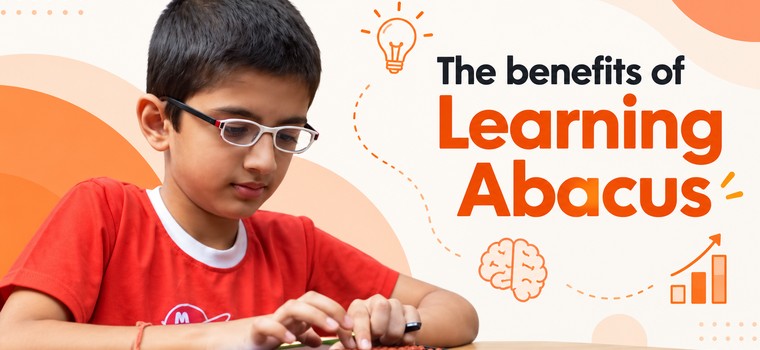
Abacus learning is not just about calculating numbers; it's a brain development exercise that enhances various cognitive skills. It improves concentration, boosts memory, and enhances the ability to visualize and process information. These skills are not limited to mathematics but extend to all areas of learning and problem-solving, a connection backed by ongoing research on abacus training.
Overcoming Math Anxiety with Abacus
Many children face math anxiety, which can hinder their academic performance and self-confidence. Abacus training introduces them to numbers and calculations in a fun and engaging way, building their confidence and turning math into a subject they look forward to rather than fear.
Abacus and Brain Development
The use of the abacus stimulates both the left and right hemispheres of the brain. This bilateral stimulation is crucial during the early developmental stages, as it enhances spatial reasoning, numerical ability, and even creativity. By regularly practicing with the abacus, children develop a balanced approach to problem-solving and learning.
5 Trends Behind Abacus's Growing Popularity
Parents aren't turning to abacus learning by chance — a few clear shifts in how children learn and are assessed are pushing more families to look for a structured mental-math program. Some of these trends are explored further in why abacus skills matter more than ever in the AI age, but here's a quick snapshot of what's driving the shift right now.
| Trend Parents Are Noticing | Why It Matters |
|---|---|
| Rising screen time | Parents want a hands-on activity that doesn't add to a child's device usage. |
| Online learning going mainstream | Live online abacus classes let children in any city or country join structured sessions without needing a centre nearby. |
| Emphasis on mental math in school assessments | Schools increasingly reward speed and accuracy in mental calculation, which abacus practice builds directly. |
| Preference for skill-building over rote learning | Abacus training focuses on visualization and concentration, not memorised formulas. |
| Calculators and AI tools doing the calculating | Parents are looking for ways to make sure children still build strong number sense on their own. |
Testimonials and Success Stories
"Since my daughter started abacus classes at Mastermind Abacus, her math grades have improved significantly, and she's more eager to tackle homework and tests," shares a satisfied parent. Stories like these are common among our students, who find that abacus learning not only improves their academic performance but also their overall approach to learning.
Frequently Asked Questions
Why are parents suddenly paying more attention to abacus learning?
Screen time, exam pressure and a shift toward online learning have made parents look for activities that build real number sense. Abacus training fits that need because it's hands-on, structured and doesn't depend on a device.
Is abacus still useful when calculators and apps can do the math instantly?
Yes — a calculator gives an answer, but it doesn't build a child's own number sense or concentration. Abacus training strengthens the thinking process behind the calculation, which stays useful even after the tool is put away.
At what age can my child start abacus classes?
Mastermind Abacus's core program is designed for ages 6–14, with two 1-hour classes a week across 10 levels. You can learn more about the skills it builds on our benefits of abacus learning page.
How is abacus training different from doing extra math worksheets at home?
Worksheets usually repeat the same method a child already knows. Abacus training introduces a new way of visualizing numbers, which works on concentration and memory alongside calculation speed.
Does abacus only help with math, or other skills too?
Abacus practice is mainly known for math, but the concentration, memory and visualization skills it builds tend to carry over into reading, planning and other areas of schoolwork as well.
Conclusion
The abacus is more than just an ancient tool; it's a bridge to the future of education. By integrating abacus training into your child's learning routine, you're providing them with a solid foundation in mathematics and cognitive skills that will benefit them throughout their lives.
Book A Free Demo
Don't wait to give your child the advantages of abacus learning. Enroll them in our abacus classes today and watch as they develop into confident, capable learners ready to tackle the challenges of tomorrow. Contact Mastermind Abacus to get started on this transformative journey.
Author – Mr. Naveen Chowdhari
Naveen Chowdhari is the Founder & Director of Mastermind Abacus, a leading name in children's mental math and brain development training. By blending traditional abacus methods with modern teaching techniques, he has created an innovative system that enhances children's concentration, memory, visualization, speed, and overall cognitive skills. Under his leadership, Mastermind Abacus now provides worldwide online abacus classes and has built a strong global franchise network, making quality brain-development education accessible across the world.
Last Updated: 26 September 2026