
How to Learn Abacus Step by Step Guide for Kids and Parents
📅 19 Sep, 2022 · ✍️ Admin
Last updated: 23 September 2026
The abacus is an ancient calculating tool that has been used for thousands of years. It consists of a series of rods or wires with beads that can be moved back and forth. By manipulating the beads, numerical calculations can be performed quickly and efficiently. The abacus is a powerful tool for developing mental math skills and is especially beneficial for young children.
Appropriate Age to Learn Abacus
The ideal age to start learning abacus is between 6 and 14 years old. This is the time when children are in their prime learning stage and have the ability to grasp new concepts quickly. However, it's never too late to learn abacus! Adults can also benefit from learning this ancient tool, especially if they want to become abacus teachers themselves.
Benefits of Learning Abacus
Learning abacus offers numerous benefits for children and adults alike. Some of the key benefits include:
1. Improved Mental Math Skills:
Abacus training helps develop strong mental math skills, as it requires students to perform calculations mentally without relying on paper or a calculator.
2. Enhanced Concentration and Focus:
Manipulating the beads on the abacus requires concentration and focus, which helps improve overall attention span.
3. Increased Memory Capacity:
Regular practice with the abacus can help improve memory capacity, as students need to remember bead positions and calculations.
4. Boosted Confidence:
As students become proficient in using the abacus, their confidence in their math abilities increases. This can have a positive impact on their overall academic performance.
5. Fun and Engaging Learning Experience:
Learning abacus can be a fun and interactive experience for children. Many abacus institutes, like Mastermind Abacus, use a game-based approach to make learning enjoyable for students.
Your Child's Abacus Learning Path at a Glance
Once you decide to start, it helps to know what the journey actually looks like. Here is how Mastermind's abacus programme is structured, from the first demo class to the final level. To understand the teaching approach behind every level, read about the Mastermind method of abacus teaching.
| Step | What happens | Time involved |
|---|---|---|
| Check the age | Mastermind's abacus programme is for children aged 6 to 14, online or at an offline centre | Before you begin |
| Book a free demo class | See the teaching style and how your child responds to the abacus | One class |
| Join Level 1 | The programme has 10 levels, and each level builds on the one before | About 3 months per level |
| Attend regular classes | Live classes with a trained teacher who checks bead movements and pace | Two 1-hour classes a week |
| Practise at home | Bead practice plus a few practice games to keep it fun | 10 to 15 minutes a day |
| Complete all levels | Your child moves step by step from bead work to mental calculation | Around 30 months at the regular pace |
How to Learn Abacus
1. Learning the abacus is not just about understanding the technique:
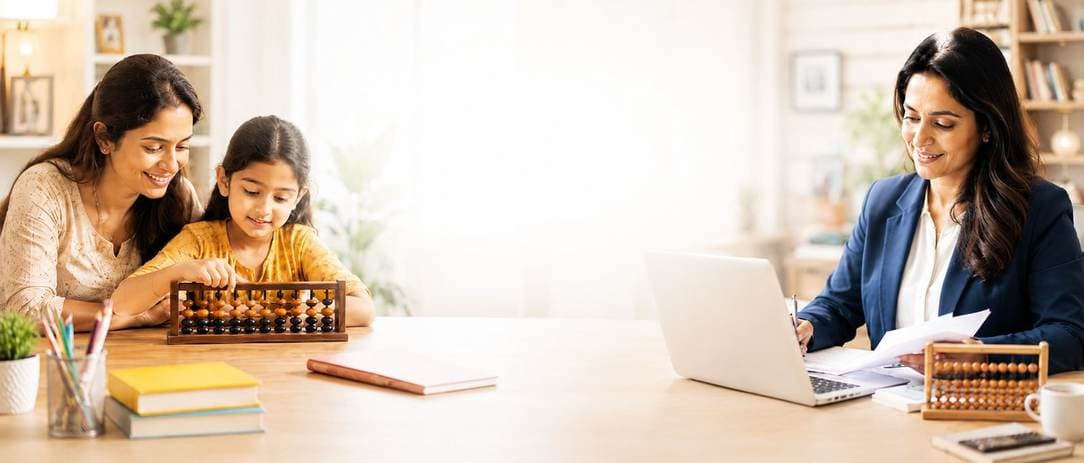
It is also about dedicated practice and proper finger movement. Similar to swimming or cycling, the more you practice, the better you become. You can learn the technique of the abacus from any book or YouTube video, but without practice and mastery of finger movements, you will not be able to perform well. It requires a proper support system. Here are some steps to help you or your child learn the abacus effectively.
2. Find a Reputable Abacus Institute:
It's crucial to choose the right abacus institute that offers high-quality instruction. Mastermind Abacus is a leading institute known for its innovative and engaging teaching methods. Its game-based approach makes learning abacus interesting for children.
3. Book a Free Demo Class:
Before enrolling in an abacus program, it's recommended to book a free demo class for online abacus. This will give you a firsthand experience of the teaching style and see if it aligns with your learning goals.
4. Utilize Online Resources:
In addition to attending regular classes, it is essential to practice regularly, dedicating at least 10 to 15 minutes each day. Mastermind has provided various resources for practice, including online math games, which you can play for 15 minutes to enhance your skills.
Frequently Asked Questions About Learning Abacus
Can my child learn abacus at home without joining classes?
Yes, a child can pick up the basic technique from books or videos, but steady progress usually needs guided practice. A trained teacher corrects finger movements early, sets the right pace for each level and keeps the child motivated. Home practice works best alongside regular classes, not as a replacement for them.
How long does it take to learn abacus completely?
The full Mastermind Abacus programme has 10 levels, and each level takes about 3 months, so completing all levels takes around two and a half years at the regular pace. Children often feel more confident with numbers in the early levels, while mental calculation skills keep building level by level.
How much should my child practise abacus every day?
At least 10 to 15 minutes of daily practice is a good target. Short, regular sessions build finger speed and bead memory better than one long session a week. Mix bead work on the abacus with a few practice games so the routine stays fun and your child looks forward to it.
Are online abacus classes as good as offline classes?
Both formats can work well when the classes are live and the teacher watches each child's bead movements. At Mastermind, the abacus programme for ages 6–14 runs both online and at offline centres with the same level structure. Choose the format that suits your child's routine; you can try a free demo of our online abacus classes first.
Can adults learn abacus too?
Yes. Adults can learn the abacus technique and use it to sharpen their own mental calculation. Mastermind's regular abacus programme is designed for children aged 6 to 14, so adults usually learn it with a different goal in mind, such as helping their child practise at home or training to teach abacus.
Does my child need to be good at maths before starting abacus?
No. Abacus starts from the basics, such as how beads show numbers, so a child does not need strong maths skills to begin. In fact, it can suit children who find numbers confusing, because they see and touch each value on the abacus before learning to picture it in their mind.
Conclusion
Learning abacus requires a proper support system and dedicated practice. Whether you're a child or an adult, finding the right abacus institute is crucial. The benefits of learning abacus, including improved mental math skills, enhanced concentration, and boosted confidence, make it a worthwhile endeavor. With the right guidance and practice, anyone can learn abacus and reap the rewards of this ancient calculating tool.
Author – Mr. Naveen Chowdhari
Naveen Chowdhari is the Founder & Director of Mastermind Abacus, a leading name in children’s mental math and brain development training. By blending traditional abacus methods with modern teaching techniques, he has created an innovative system that enhances children’s concentration, memory, visualization, speed, and overall cognitive skills. Under his leadership, Mastermind Abacus now provides worldwide online abacus classes and has built a strong global franchise network, making quality brain-development education accessible across the world.
Last Updated: 23 September 2026