

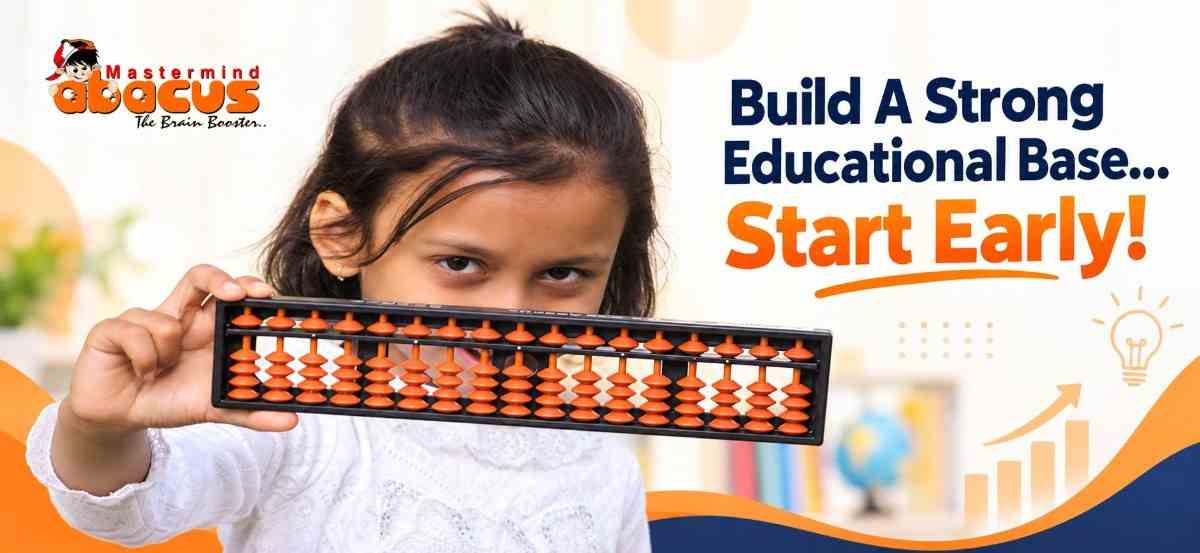
Build A Strong Educational Base... Start Early!
📅 14 Nov, 2013 · ✍️ Admin
Last updated: 29 September 2026
Give your child the best education solutions from the beginning
Help your child build strong skills at an early age
As a concerned parent, you might be aware about the cut-throat competition among the students. Even you would definitely want your child to become successful in every area of participation. And, to do so, you have to put in continued efforts to add to the child’s achievements. Education plays an active role all this while.
Don’t you think if you give your child the best education solutions from the very beginning, he/she will be able to build a foundation that can easily adapt to ferocious competition in the future? If you are affirmative, implement it right away.
Take a step to reach to the best education providers from the start. Give them supplementary education like the Abacus course that supports a kid’s mental growth and helps him/her build confidence among his/her peers.
Building Number Sense Before Abacus Begins
Long before formal abacus classes begin, children build number sense through play and everyday routines. The table below shows simple home activities for the early years, and you can read how these years shape thinking in our guide on how early education shapes your child’s cognitive growth. For children aged 5 to 6, Mastermind also offers Lingo Bingo (offline).
| Early foundation skill | Everyday activity at home | What to look for |
|---|---|---|
| Counting with meaning | Counting stairs, fruits or toys while touching each one | Your child matches one number to one object instead of only reciting numbers |
| Comparing quantities | Asking “Which plate has more?” at snack time | Your child can say more, less or same without counting every item |
| Sorting and patterns | Sorting buttons or blocks by colour, size or shape | Your child can explain why some items belong together |
| Grouping and small sums | Adding a few blocks to a group and counting again | Your child starts to see small groups instead of counting one by one |
| Focus and listening | Short board games or story-and-count time | Your child stays with one activity for a few minutes without reminders |
Mastermind’s abacus programme is meant for children of age 6 to 14 years. Good Abacus training can help develop children’s brain and overall personalities. Apart from that it can give the students a strong base of easily understanding, learning and grasping complex concepts of subjects like mathematics etc.
Since the course benefits are experienced during the early ages of life, therefore it is especially useful for young learners. If you as a parent seek to ‘start early’ and gift your children with excelling qualities, put them in Mastermind Abacus. You will cherish your decision as your child grows in confidence in academics and elsewhere.
Frequently Asked Questions
Which age group does Mastermind’s abacus programme cover?
Mastermind’s abacus programme is designed for children aged 6 to 14, and it is available both online and offline. It runs across 10 levels of 3 months each, with two 1-hour classes every week. You can see how the live classes work on our online abacus classes page.
Our child is turning 5. Where should we begin?
For children aged 5 to 6, Mastermind offers Lingo Bingo, available offline. Until your child is ready for the abacus programme at age 6, everyday counting, sorting and comparing games at home are a gentle way to build comfort with numbers without any pressure.
Does an early start really make a child better at maths?
Early, playful exposure to counting, comparing and patterns helps children feel comfortable with numbers, but it is not a guarantee of better marks. Children grow at different speeds, and steady, enjoyable practice matters more than starting early. Our post on the benefits of early math learning explains this in more detail.
How can I build number sense at home without it feeling like homework?
Keep it short and part of daily life: count stairs while climbing, share snacks and ask who has more, or sort toys by size and colour. A few relaxed minutes work better than long sessions. For more ideas, see these fun learning activities to boost your child’s math skills.
What results can we realistically expect from abacus classes?
With regular practice, abacus learning can support concentration, comfort with numbers and confidence. Results differ from child to child and depend on practice and consistency, so they are not a guarantee of marks or a replacement for school maths. Our guide to developing mental math skills shows how parents can support progress at home.
Author – Mr. Naveen Chowdhari
Naveen Chowdhari is the Founder & Director of Mastermind Abacus, a leading name in children’s mental math and brain development training. By blending traditional abacus methods with modern teaching techniques, he has created an innovative system that enhances children’s concentration, memory, visualization, speed, and overall cognitive skills. Under his leadership, Mastermind Abacus now provides worldwide online abacus classes and has built a strong global franchise network, making quality brain-development education accessible across the world.
Last Updated: 29 September 2026