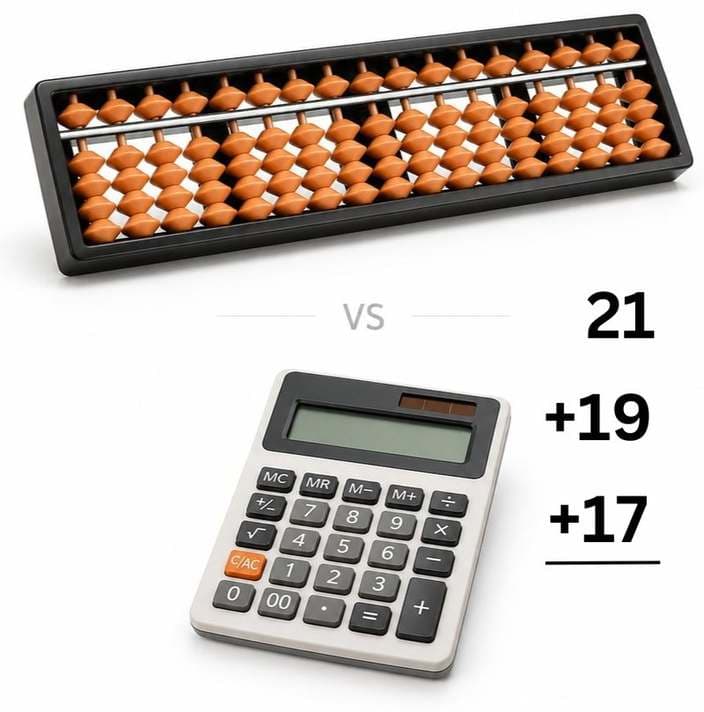
Your child can
beat the calculator.
Abacus math trains children to picture numbers and calculate in their heads — faster, sharper and more confident. Not a tuition class. A brain-training habit for life.
What is abacus math?
Abacus math is a method of doing arithmetic using an abacus — a frame of beads. Children first learn to add, subtract, multiply and divide by moving beads, then learn to picture the abacus in their mind and calculate mentally, without the tool.
Started early — around age 6, when the brain grows fastest — abacus math builds far more than calculation speed. It trains focus, memory and confidence that carry into every subject at school.
How does abacus math work?
Four stages take a child from moving beads with their fingers to calculating entirely in their mind.
Learn the beads
Children learn what each bead is worth and how to represent any number on the abacus.
Calculate by hand
They add, subtract, multiply and divide by physically moving beads — building accuracy.
Picture the abacus
The physical tool is taken away — children now “see” the beads and move them mentally.
Mental maths at speed
Sums are solved in the head — quickly and accurately, often faster than a calculator.
Feel the superpower in 10 seconds
This is flash math — the skill abacus builds. Numbers flash one by one; add them in your head. Notice how quickly your brain wants to “see” the total.
Now imagine your child doing this with bigger numbers, faster than you can reach for your phone.
Why mental abacus makes maths click
Picturing and moving beads in the mind uses both hands and both sides of the brain at once — the logical left and the visual right. That’s what turns slow, finger-counting arithmetic into fast, confident mental maths.
- ←Left brain — logic, numbers, step-by-step reasoning
- →Right brain — visualisation and the memory of the bead picture
- ✓Together — faster mental calculation and accuracy under exam pressure
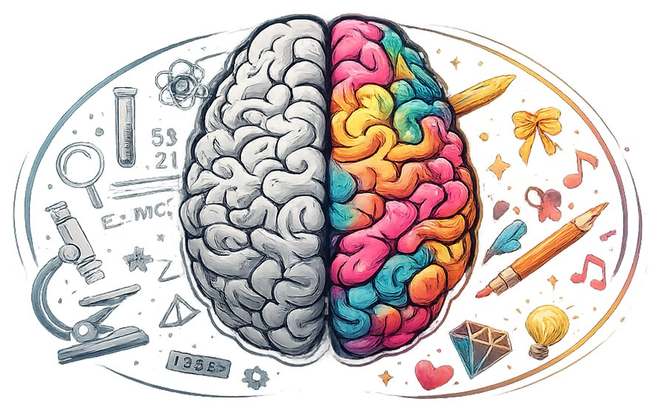
logic & science
creativity & art
A structured path, step by step
Children progress through each step in sequence — never skipping, always building. Each step ends with an assessment, so you can see real progress.
Mastermind Abacus follows 10 Structured Program Levels — a graded path from first sums to advanced mental maths.
Choose offline or online — same results
Our live online classes deliver results comparable to our in-person classroom. Pick whatever fits your family’s routine.
Offline classes near you
With 1,000+ centres worldwide across 17 countries, there’s likely a Mastermind Abacus classroom close by. Tell us where you are and we’ll find your nearest centre.
Find a centre near me →Online abacus classes
Learn from home with one of the best live online abacus platforms — real teachers, live classes, and the same structured curriculum. Try it first, for free.
Book a Free Demo →What sets us apart
Many centres teach abacus. Here’s what to look for — and what Mastermind gives you.
| What matters to parents | Mastermind Abacus | A typical local class |
|---|---|---|
| Experience | 21+ years, global network | Often new / single centre |
| Live online option | Yes — one of the best live online abacus platforms | Rarely |
| Free trial before you commit | Yes — free demo class | Varies |
| Structured, assessed levels | Yes — 10 Structured Program Levels | Inconsistent |
| Practice tools for home | Yes — worksheet generator & LMS | Usually none |
| Centres to choose from | 1,000+ worldwide · 17 countries | One location |
Comparison is general guidance for choosing a provider, not a claim about any specific competitor.
The maths change parents notice first
Real changes parents tell us about — in exams, at the shop, and at homework time.
“In exams she used to take lot of time to solve the mental math section, but now she solves them in minutes and has spare time to recheck her answers. Her math scores have certainly improved.”
“I was surprised when he totalled up the entire trolly in his head at the super market. Even the cashier was surprised when he told him the exact correct amount.”
“Remembering and reciting tables was always a painful task for my child. But after one year of Abacus classes, he now multiplies 3 & 4 digit numbers mentally.”
Abacus math: your questions, answered
What is abacus math?
Abacus math is doing arithmetic using an abacus — a bead frame. Children first calculate by moving beads, then learn to picture the abacus in their mind and solve sums mentally, without the physical tool.
What age should my child start?
Children can start the core abacus program from around 6 years — ages 6 to 14 are ideal because the brain develops fastest in these years and picks up the skill quickly. For ages 5–6, Mastermind's Lingo Bingo early-years program builds number sense first.
Does my child need to be good at maths first?
No. Abacus math starts from the very basics and builds up. No prior maths ability is needed — many children who join actually dislike maths at the start.
How soon will I see results?
Most parents notice better concentration and faster calculation within the first few months of regular classes plus short daily practice. Full mastery across all levels takes a few years of consistent learning.
How much daily practice is needed?
Short and regular beats long and rare — around 10–15 minutes of practice a day, alongside the weekly class, is enough for steady progress.
Are online classes as good as offline?
Yes. Mastermind runs one of the best live online abacus platforms, with the same curriculum, certified teachers, and structured practice. Results are comparable to those of in- person classes.
Will abacus confuse the maths taught at school?
No — it supports school maths. Abacus builds number sense, speed and confidence that make school arithmetic easier, not harder.
How do I try it before enrolling?
Book a free demo class. Your child gets a real taste of a lesson and you can ask the teacher anything before deciding.
See your child beat the calculator
Book a free demo class — no cost, no obligation. Watch what abacus math does for your child’s speed, focus and confidence.