

Why Educational Games Matter for Children Today
📅 03 Oct, 2013 · ✍️ Admin
Last updated: 29 September 2026
The traditional method of teaching the students is inside a classroom where the students are taught using books and a board to simplify explanations. But, is that enough in this age where technology is being adapted in every field. Children need detailed knowledge, they are eager to learn more. To fulfill these demands, use of educational games solves a great purpose.
The educational games reform the regular education patterns and prepares the students effectively for an integrated, interconnected and technology driven world.
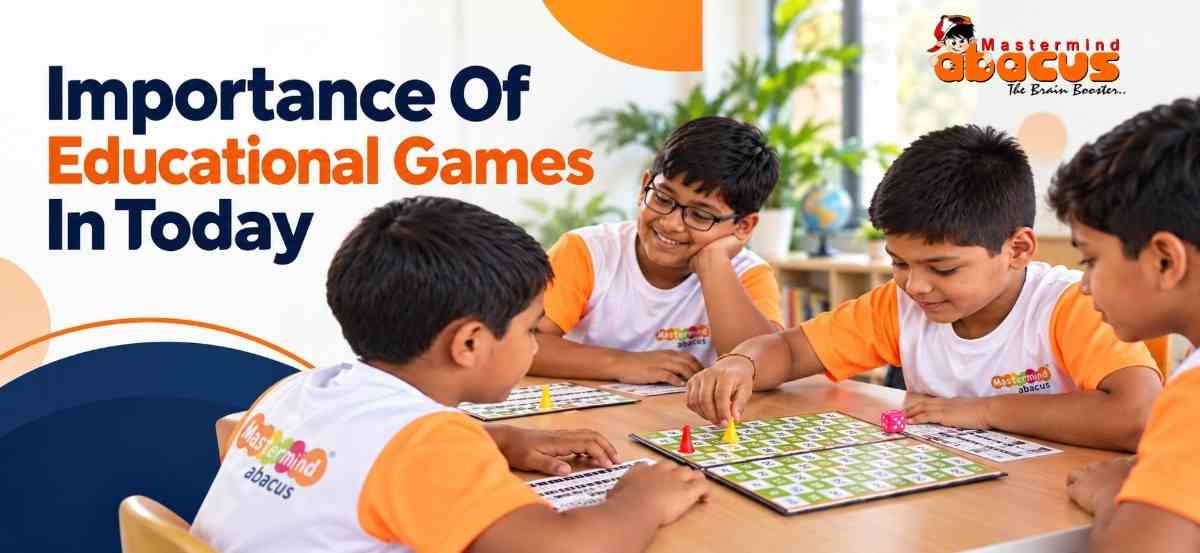
These games serve as a value addition for children as it ensures higher involvement and participation of children. This is more effective as the students relate themselves with the situations of the game and thus dedicate themselves into it. All the more, while these games proceed, students discover and learn new topics in an interesting manner, which they may remember for a longer period.
The Educational games benefit the students in following ways:
- Develops the basic skills like reading, language, math and social skills
- Lets students discover new approaches and methods and so encourages thinking abilities
- Attracts participation of individuals irrespective of the demographic traits like age, gender, status etc.
- Helps students in setting and achieving goals through proper and timely evaluation
- Examines individual characteristics like self-conceptualization, self-esteem, goal-setting etc.
- Helps hold a child’s attention for a longer span of time
- Encourages curiosity in students along with fun and entertainment
- Increases novelty by putting up new challenges to be faced
- Useful for acquiring computer and IT skills that has become the need of the hour in present scenarios
- Acts as a stimulator for learning as it has the ability to link games with reality
Drill Practice vs Game Based Practice
Every child needs repetition to get better at abacus, but repetition does not have to feel like a chore. Here is a simple side-by-side look at how a child may experience a plain drill session compared with a game-based one. For more game ideas that work at home and in class, read our post on fun educational games for kids.
| Aspect | Plain drill practice | Game-based practice |
|---|---|---|
| Child’s mood | Can start to feel like a chore after a few days | Feels like play, so the child is often keen to return |
| Attention | Wanders once the sums begin to repeat | New levels and challenges give the mind a fresh target |
| Feedback | Comes later, after a worksheet is checked | Answers are marked on the spot, so mistakes are seen right away |
| Motivation | Child often practises because a parent insists | Points and progress make the child want to beat the last score |
| Consistency | Practice days are easy to skip | Short, fun rounds fit more easily into a daily routine |
Understanding the present day need, we at Mastermind Abacus have adapted the technology through educational games for teaching Abacus to students. Abacus course is a long term course of 2 and half years, divided into 10 levels. To be good at using Abacus, it is important to practice it regularly. But, regular practice can be monotonous and can be accompanied by boredom, while games ensure new ways of practice that makes students more participative and active.
Students, who take Mastermind Abacus course, practice Abacus calculations on a gaming platform called the Speed Building Software. This software is colorful, vibrant, and attractive. The questions can be practiced easily at any point of time with fewer distractions and less boredom.
Frequently Asked Questions
Are educational games really useful, or are they just screen time?
Educational games are useful when they have a clear learning goal, such as practising sums or building number sense, and are played in short, planned sessions. Passive scrolling is different. Choose games that give quick feedback and match your child’s level, and keep them alongside books, teacher guidance and outdoor play.
At what age can children start learning through educational games?
Simple games with counting, matching and sorting can suit young children under adult supervision. For structured abacus learning, Mastermind’s programme is for ages 6 to 14, online and offline, while Lingo Bingo is an offline programme for ages 5 to 6.
How do games make abacus practice less boring?
Abacus needs regular practice, and repeating the same sums can tire a child. Games add levels, points and quick results, so each round feels different. Mastermind students practise on the Speed Building Software, a colourful game platform, which helps make regular practice feel lighter.
How much game time is right for a child each day?
No single number suits every child. Short, purposeful sessions work better than long stretches, and games should never replace homework, sleep or outdoor play. The Mastermind Learn & Grow app has parental controls, so parents can set screen limits. For more on balance, see our guide on improving attention span without banning screens.
Can games help my child stay focused while studying?
Games that ask a child to think, compare and solve can help hold attention for a while, because every step brings a small new challenge. Focus is still a habit built over time. You can find more ideas in our post on how abacus training supports concentration and focus.
What can I do at home to make learning feel like a game?
Turn everyday moments into small challenges: count steps on the stairs, guess the total at the shop, or gently race yesterday’s score. Keep rounds to a few minutes and praise effort, not just answers. More ideas are in our post on fun learning activities to boost math skills.
Do educational games replace regular classes and teachers?
No. Games support learning, but a trained teacher explains concepts, corrects methods and guides progress. At Mastermind, game-based practice works together with regular teaching, not instead of it. If screen use worries you, read The Ultimate Digital Detox for Young Minds.
To learn Abacus through educational games (together with the regular teaching methods), take the Abacus course at Mastermind for your kid. Children are taught mental arithmetic skills to support their academic journey.
Author – Mr. Naveen Chowdhari
Naveen Chowdhari is the Founder & Director of Mastermind Abacus, a leading name in children’s mental math and brain development training. By blending traditional abacus methods with modern teaching techniques, he has created an innovative system that enhances children’s concentration, memory, visualization, speed, and overall cognitive skills. Under his leadership, Mastermind Abacus now provides worldwide online abacus classes and has built a strong global franchise network, making quality brain-development education accessible across the world.
Last Updated: 29 September 2026