

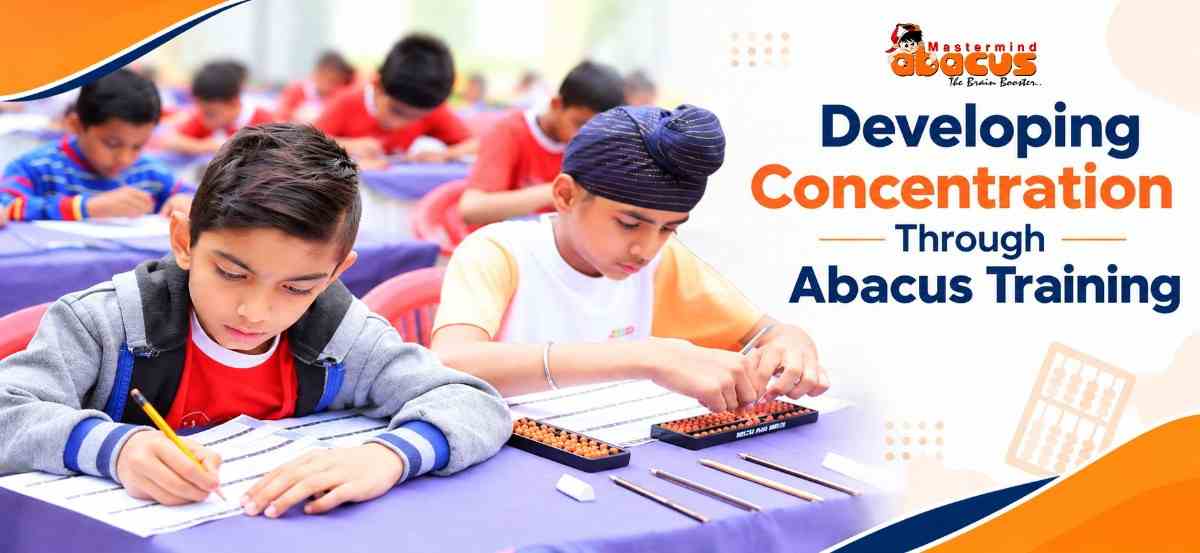
Developing Concentration Through Abacus Training
📅 26 Sep, 2013 · ✍️ Admin
Last updated: 29 September 2026
Abacus Training Enhances Concentration Level
Concentration is the ability or power to focus on a particular thing. It is a process that involves an individual’s attention and requires mental effort to gather quantitative and qualitative information. Concentration is a state through which an individual can grasp the maximum knowledge from an activity. Of the several processes, Abacus Training is one of the ways that can help enhance the concentration levels of young minds.
High levels of concentration are required to develop a sound understanding of studies, sports or any other activity.
As parents, you may not realize the importance of concentration. You may also be unaware of the reasons for the lack of the child’s concentration. Some of the reasons include the following:
A) Inadequate amount of motivation
B) Lack of enthusiasm and encouragement
C) Distraction through surrounding activities
D) Low self-esteem and confidence
E) Unsatisfactory and inferior performance in the classroom
F) Unclear and undefined objectives etc.
Now, while going through these causes which affect concentration, you would realize which of these applies to your child.
If you could point out any of these reasons (or maybe two or more), you can seek solutions that enhance the child’s concentration. You can then create a plan. Follow it and implement it. Some pieces of advisory:
A) Set short-term goals that are achievable
B) Make children involved in activities that demand focus
C) Make them play and solve puzzles
How does Abacus Training help in developing concentration?
Abacus helps children to develop sharp concentration as they learn to practice Abacus through visual learning. Abacus training can influence visualization abilities in a kid. The kids between the ages of 6 to 14 years concentrate more towards lessons (or books) that are visually attractive.
Abacus gives children the liberty to solve a question on an Abacus instrument rather than on paper by moving the beads. This process improves their concentration. They listen, visualize, calculate and thus solve the sum quickly. All this requires understanding the concept and demands a high concentration level.
How One Abacus Sum Builds Focus
Every abacus sum asks a child to do several small things in a row, and each of them needs attention. The table below shows what happens in class, step by step. To build the same habit outside class, read our guide on how to improve your child's attention span in 30 days without banning screens.
| Step in class | What the child does | Focus skill used |
|---|---|---|
| 1. Listen | Hears the number or instruction called out by the teacher | Attentive listening |
| 2. Visualise | Pictures the beads and rods of the abacus | Visual concentration |
| 3. Move the beads | Sets the beads with the fingers as the sum requires | Steady attention and hand-eye coordination |
| 4. Calculate | Works out the answer step by step, first on the abacus and later in the mind | Sustained mental effort |
| 5. Check and repeat | Confirms the answer and moves on to the next sum | Patience and self-checking |
In short, Abacus trains the kids to look at the problem and perform mental calculations. It is closely linked to stronger concentration abilities.
Increased concentration has various benefits for children. To name a few:
· Improved academic scores
· Enhanced understanding and thinking
· Ability to form new and innovative concepts
· Improved Mental Math abilities
· Better associative memory etc.
Frequently Asked Questions
Q. Why does my child lose concentration so quickly?
Children are still learning to hold their attention, so short focus spans are common. Tiredness, hunger, distractions or a lack of interest can shorten them further. Start by noticing when your child loses focus. Our post on concentration, listening ability, memory and recall explains these links in more detail.
Q. How can I find out why my child is not able to concentrate?
Watch your child for a few days. Note when focus drops: during homework, in class, or after screen time. Then compare it with the causes listed above, such as low confidence or unclear goals. Once you see a pattern, try one change at a time, like the simple concentration activities for children.
Q. Why does moving beads on an abacus make a child pay closer attention?
The child has to listen, picture the beads and move them correctly, all within one sum. A small slip changes the answer, so attention stays on the task. Regular practice turns this into a habit of focus. You can read more about the benefits of abacus for children.
Q. How soon will I see a change in my child's focus after starting abacus?
Every child is different, so there is no fixed timeline. Many parents first notice small changes, such as sitting a little longer with homework or listening more carefully. Regular class attendance and short daily practice matter more than speed. Give your child time, and encourage effort instead of comparing progress with others.
Q. Can abacus classes replace good sleep and a proper routine for better focus?
No. Abacus is one helpful activity, not a substitute for the basics. Enough sleep, healthy food, play time and limited screen time all support concentration. Abacus practice works best alongside these habits. If distractions at home are a problem, our guide on the digital detox for young minds can help.
Q. Is age 5 too early for Mastermind's abacus classes?
Our abacus programme is designed for children aged 6 to 14. For younger children aged 5 to 6, we offer Lingo Bingo, an offline programme that builds early skills in a playful way. It is a gentler start before the child moves on to abacus learning.
Q. Can my child build focus through live online abacus classes from home?
Yes, it is possible. Mastermind Abacus offers live online abacus classes where a teacher guides the child in real time. A quiet corner, a fixed class time and a parent nearby for the first few sessions help the child stay attentive throughout the class.
Q. Is poor concentration always a sign of a learning problem?
Not always. Many children lose focus because of tiredness, stress or lack of interest. Abacus is an educational activity, not a therapy. If your child has had persistent difficulty with attention for a long time, please consult a qualified professional or a school counsellor for a proper assessment.
This is why those who take the Abacus course can gain a helpful edge in the classroom. They often feel more confident in their approach.
Contact Mastermind Abacus, an Abacus training institute, to make your child avail of the benefits of an Abacus. The company has taught students advanced levels of mental math since 2005. We have a global presence in 17 countries.
Mastermind Abacus now also facilitates students who would prefer Online Abacus Classes. They can fill out the inquiry form to register for a free Demo class.
Read More: Abacus Class For Better Mental Health
Author – Mr. Naveen Chowdhari
Naveen Chowdhari is the Founder & Director of Mastermind Abacus, a leading name in children’s mental math and brain development training. By blending traditional abacus methods with modern teaching techniques, he has created an innovative system that enhances children’s concentration, memory, visualization, speed, and overall cognitive skills. Under his leadership, Mastermind Abacus now provides worldwide online abacus classes and has built a strong global franchise network, making quality brain-development education accessible across the world.
Last Updated: 29 September 2026