
Abacus And Visualization
📅 25 Sep, 2013 · ✍️ Admin
Last updated: 29 September 2026
Abacus Learning Enhances Visualization Abilities
Visualization is the ability to create an image in an individual's mind, which has a perception of their surroundings. It is also known as the skill to represent information, data or process in the form of mental pictures. It is seen that Abacus learning enhances visualization in the young minds.
How Is Visualization Developed Through Abacus?
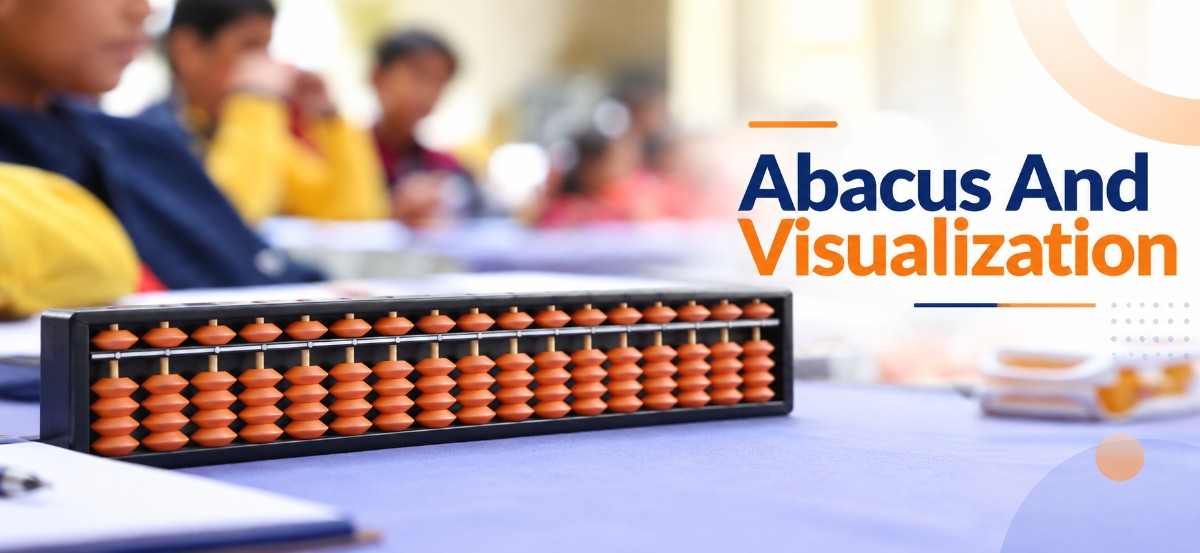
The long-term training of 2 and half years makes the Abacus users skilled in visualizing the image of the Abacus in their minds. Further calculations can be performed on this image mentally without converting them into words or numbers, instead moving the beads mentally on the image of the Abacus created. This is the actual process by which children trained in using the Abacus Tool perform mental calculations. It is often referred to as Abacus Mental Math.
Common Myths About Abacus Visualization
Because mental abacus happens inside a child's mind, parents often wonder what it really looks like. The table below clears up the most common myths. To see how this connects with the brain's spatial number map, read our blog on how mental abacus training activates the brain's spatial number map.
| Common myth | What is actually true |
|---|---|
| Only children with a naturally vivid imagination can do it. | Visualization is a skill that grows step by step with regular practice on the abacus. |
| The child actually sees a real abacus in front of their eyes. | The child forms a mental picture of the abacus and moves the beads in that picture. Nothing needs to be seen outside. |
| Visualization means memorising answers or number tables. | The child works out each sum by moving imaginary beads. It is a way of calculating, not of memorising answers. |
| Visualization only helps with maths. | Holding a clear picture in the mind may also be useful in subjects like geometry, maps and diagrams. |
| A child can visualize the abacus after just a few classes. | Mental abacus comes after a child is comfortable with the physical abacus, and needs steady practice across the programme's levels. |
These visualization of images can be easily studied through EEGs (Electro Encephalograms), as observed by Ms Kimiko Kawano, a Researcher from Nippon Medical School, Center for Informatics and Sciences.
Visualization is often linked with the right side of the brain, and abacus practice is believed to engage it by building the knack of visualizing images.
Frequently Asked Questions
What does it mean when a child "visualizes" the abacus?
It means the child pictures the abacus in their mind and moves the beads in that picture to add, subtract, multiply or divide, without needing a physical tool. This stage is called mental abacus, and it comes only after regular practice on the physical abacus.
My child does not imagine things easily. Can visualization still be learned?
In most cases, yes. Visualization grows gradually, just like reading or riding a cycle, when a child practises regularly in small steps. Some children pick it up faster than others, so patience and steady practice matter more than natural talent.
How can I tell that my child is starting to visualize the abacus?
You may see your child close their eyes, look upward or move their fingers in the air while solving a sum, and then give the answer without touching any beads. To understand this stage better, read how children move from a physical abacus to mental abacus.
Which simple home activities can support visualization?
Try a short "close your eyes and describe" game: ask your child to picture their room or school bag and name everything inside. Practice on Mastermind's virtual abacus gives easy practice at home too. Keep sessions short and playful, and add these ideas to improve your child's attention span.
Does visualization use only the right side of the brain?
Not only. Visualization is often linked with the brain's right side, but mental abacus also involves number processing and attention, so several brain areas work together rather than just one. For a simple explanation, read why abacus connects the left and right hemispheres.
From what age can my child start learning visualization through abacus?
Mastermind's abacus programme is for children aged 6 to 14, both online and offline. Visualization develops gradually across its 10 levels, each lasting three months, at your child's own pace. Younger children aged 5 to 6 can begin with our offline Lingo Bingo programme.
Can my child learn visualization through live online abacus classes?
Yes. Mastermind's live online abacus classes follow the same 10-level programme, with two one-hour classes every week, guided by a trainer, so your child can practise from home. You can also book a free demo class to see how the teaching works.
Want your child to experience it? Admit your child to the Mastermind Abacus course and discover their hidden potential. We inspire your child to grow in confidence and strengthen their mental arithmetic skills. Let your child join Mastermind Abacus now!
Abacus training for kids is also now available in Mastermind Online Abacus classes. You can fill out the inquiry form and book a free demo class for a first-hand feel.
Also Read: Minimizing Struggle With Numbers
Author – Mr. Naveen Chowdhari
Naveen Chowdhari is the Founder & Director of Mastermind Abacus, a leading name in children’s mental math and brain development training. By blending traditional abacus methods with modern teaching techniques, he has created an innovative system that enhances children’s concentration, memory, visualization, speed, and overall cognitive skills. Under his leadership, Mastermind Abacus now provides worldwide online abacus classes and has built a strong global franchise network, making quality brain-development education accessible across the world.
Last Updated: 29 September 2026