

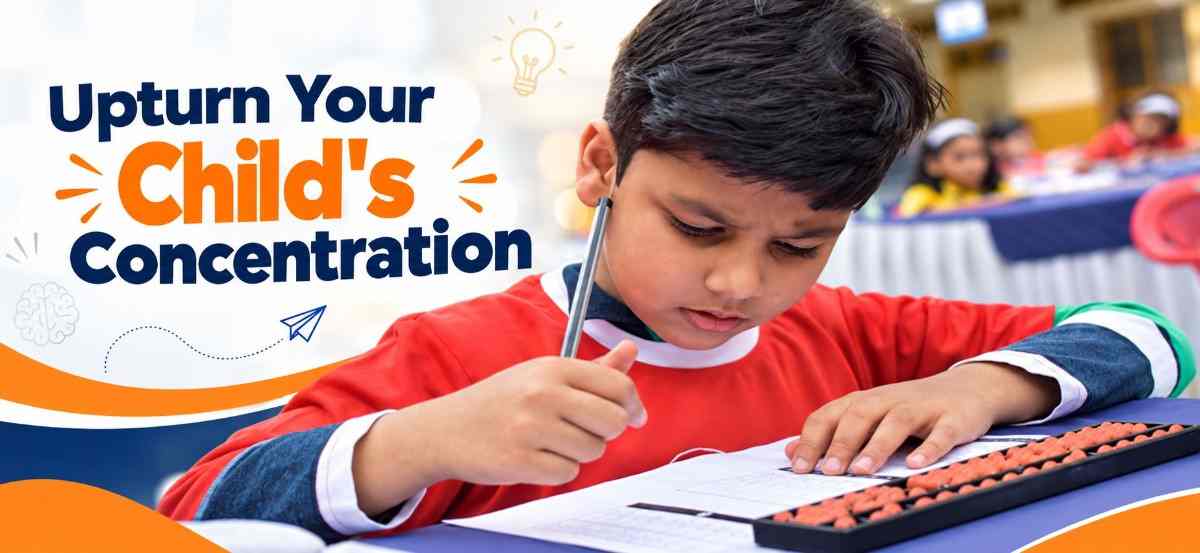
Upturn Your Child's Concentration
📅 22 Oct, 2013 · ✍️ Admin
Last updated: 29 September 2026
Most of the things that a child studies are remembered only if he/she has concentrated during that particular time span. Lack of concentration not only affects the education, but also any area of participation.
Concentration is essential to perform any action effectively. For basic skills like listening, memorizing, recalling etc., concentration is required. When a child studies, it is necessary that he/she doesn’t get distracted and concentrate to remember what is being learnt or studied.
Here are some primary ways by which a child’s concentration can be improved:
· Ensure proper nutrition, sleep and relaxation to the child’s body
· Schedule each activity, whether study or play
· Give attention on the smallest actions and appreciate the good deeds
· Encourage to read, speak, talk and write
· Make lessons interesting. Follow the learning style that benefits your child personally
· Make use of colors, pictures, stories or other illustrations
· Use educational and online games for increased participation
Five Minute Concentration Games to Try at Home
Knowing the tips is one thing; turning them into a daily habit is another. These short games take about five minutes each and fit easily into a normal evening, so keep the difficulty suited to your child’s age. For a longer, week-by-week plan, read our guide on how to improve your child’s attention span in 30 days without banning screens.
| Game | How to play | What it builds |
|---|---|---|
| Spot the Change | Put a handful of small objects on a tray and let your child look for a few seconds. Ask them to close their eyes, remove or swap one object, then ask what has changed. | Observation and visual memory |
| Listen and Repeat | Say a short list of numbers or words. Your child repeats it in the same order, and later in reverse order when ready. | Listening and working memory |
| Count the Claps | Clap or tap a few times while your child keeps eyes closed and counts silently. They then say the total. | Careful listening and counting |
| Spot the Difference | Use two similar pictures from a magazine or a puzzle book and find the differences together. | Attention to detail |
| Story Recall | Read a short story aloud, then ask three simple questions about it. | Listening and recall |
Frequently Asked Questions
How long can my child be expected to concentrate at a time?
It depends on the child’s age and on the task. Younger children usually manage only a few minutes on one activity, while older children can stay with a task for longer. Instead of pushing for long stretches, build focus gradually with short, enjoyable sessions and a small break in between.
Does too much screen time make it harder for my child to concentrate?
It can. Fast-changing videos and games make slower tasks like homework feel dull by comparison. Keep screen time limited, make study time screen-free and add some outdoor play. Our guide on a digital detox for young minds has simple ideas to start with.
My child loses focus during homework. What can I do?
Start by reducing distractions: a fixed time, a quiet corner and the phone or TV switched off. Break homework into small parts with a short break after each one. Praise the effort, not just the marks. Consistency matters far more than long sitting hours.
Do sleep and food really affect my child’s concentration?
Yes. A tired or hungry child finds it hard to pay attention, however interested they are. Aim for regular meals, enough water and a fixed bedtime, especially on school nights. These basics support focus far more than any single trick, and they work best alongside the daily habits listed above.
How often should we play concentration games at home?
Short and regular works better than long and occasional. Try a game or two on most days for about five minutes, and stop while your child is still enjoying it. If a game starts to feel like a chore, switch to another one from the table above and keep the mood light.
How does abacus learning help a child concentrate?
Abacus practice asks a child to listen carefully, follow each step and stay with a sum until it is done. With regular practice, many parents notice better focus in studies. Read how abacus training builds concentration and focus or explore the wider benefits of abacus learning.
What if my child’s lack of focus does not improve?
If distraction is severe or continues despite good routines, speak to your child’s paediatrician or a qualified child specialist. Abacus is an educational activity, not a therapy; persistent difficulties should be assessed by a qualified professional. Meanwhile, keep routines calm and encouraging, and avoid comparing your child with others.
Courses like Abacus can help improve skills like concentration in children. Put your child into Mastermind Abacus online classes and help them benefit from regular, structured practice.
Author – Mr. Naveen Chowdhari
Naveen Chowdhari is the Founder & Director of Mastermind Abacus, a leading name in children’s mental math and brain development training. By blending traditional abacus methods with modern teaching techniques, he has created an innovative system that enhances children’s concentration, memory, visualization, speed, and overall cognitive skills. Under his leadership, Mastermind Abacus now provides worldwide online abacus classes and has built a strong global franchise network, making quality brain-development education accessible across the world.
Last Updated: 29 September 2026