

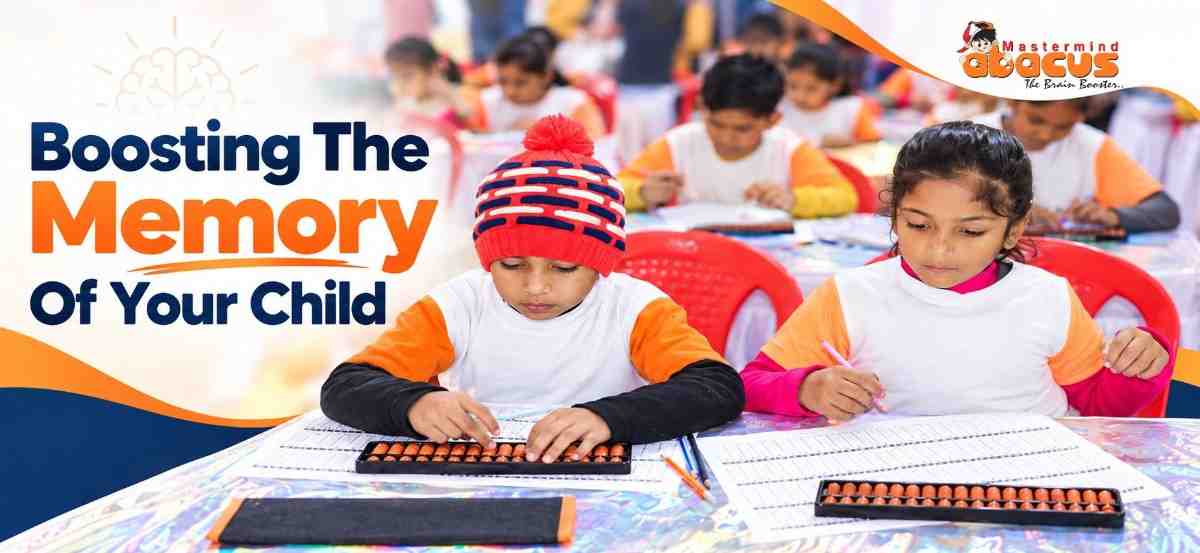
Boosting The Memory Of Your Child
📅 16 Oct, 2013 · ✍️ Admin
Last updated: 29 September 2026
Memory is a key to attain academic success. Not only in academics, memory is an imperative part of our routine instances too. The kids who have enhanced memorization skills benefit immensely in examinations and competitions. One should necessarily work on boosting their child’s memory.
Here is how you can enhance your child’s memory.
1. Encourage stress-free learning
Stress is a situation where the brain functions get blocked and are unable to adapt new things or lessons. This ultimately affects one’s memory to relate with the events occurring at a particular time. Stress-free situations on the other hand ensure that everything that is being taught is effectively stored in the memory.
2. Increase attention
Make use of methods that are interesting and involves student’s attention. Children can easily get distracted from studies and so special care has to be taken to grab their attention.
Common Memory Myths, Explained
Many parents carry old beliefs about how a child’s memory works. Here are five common ones, set against what actually helps. If attention is the part you struggle with most, our guide on how to improve your child’s attention span in 30 days without banning screens goes deeper.
| Common belief | What actually helps | Try this at home |
|---|---|---|
| “Memory is fixed at birth, so nothing can be done.” | Memory grows like a skill, with regular and enjoyable practice. | Play a two-minute “remember the list” game while shopping or cooking. |
| “More hours of study means better recall.” | A calm, focused mind stores lessons better than a tired or worried one. | Study in short blocks with small breaks and a relaxed mood. |
| “Repeating a lesson again and again is enough.” | Linking a lesson to a real-life example makes it last longer. | Ask, “Where did we see this today?” |
| “A child who is distracted will still remember.” | Interesting methods hold attention, and attention is what lets a lesson enter memory. | Use pictures, stories and hands-on activities. |
| “Children only remember what we tell them.” | Children also remember what they see us do. | Show the habit yourself: read, ask questions and revise together. |
3. Relate to memories
Everything that happens around us gets accumulated in the subconscious mind. When some real life scenarios are discussed with children, these memories can be brushed up and it ensures long lasting effect of the topic of study. As a result, recalling at the time of exams becomes a piece of cake.
4. Work on what you Demonstrate
Remember, while you teach your kids your actions and your demonstrations are stored in the child’s memory. So, be careful and make the environment such that it is worth memorizing so that it can be used at the right time by kids.
Frequently Asked Questions
Can a child's memory really be improved, or is it something they are born with?
Memory can be strengthened. Children are born with different natural abilities, but attention, interest and regular practice all shape how well they remember. Calm study time, simple recall games and real-life examples help lessons settle in. Small daily efforts usually work better than occasional long sessions.
Why does my child remember songs and cartoons easily but forget textbook lessons?
Songs and cartoons are colourful, repeated and enjoyable, so a child pays full attention without any effort. Textbook lessons often feel dry by comparison. Try turning lessons into stories, rhymes or small real-life examples. When a topic connects to something the child has seen or done, it becomes much easier to remember.
How can I use everyday situations to help my child remember a lesson?
Link the topic to something your child has actually experienced. Fractions become slices of a roti or pizza, and a science idea becomes something seen on the way to school. When a lesson is tied to a real memory, recalling it later gets easier. Read more in our post on listening, memory and recall.
Do children really pick up memory habits by watching us?
Yes, children copy what they see. If they watch you read, revise, plan and stay calm when something feels difficult, they treat those habits as normal. Sit with them for a short study time and show how you remember things yourself. Your example often teaches more than repeated instructions.
How does abacus practice support a child's memory?
Abacus learners picture the beads in their mind and work out sums from that image, which exercises visualisation, focus and recall together. Results differ from child to child and depend on regular practice. See the wider benefits on our benefits of abacus page, or read about the effects of abacus training on memory.
Is an abacus class enough, or should I also practise memory games at home?
Both work best together. Mastermind's abacus programme, for ages 6 to 14, has two 1-hour classes a week, online or offline, and short home games such as concentration games for children keep the habit alive between classes. Children aged 5 to 6 can begin with Lingo Bingo, our offline programme.
Consider an abacus course for your child. Regular abacus practice supports visualisation, concentration and memory, which can help children in their studies. You can also explore live online abacus classes from Mastermind Abacus.
Author – Mr. Naveen Chowdhari
Naveen Chowdhari is the Founder & Director of Mastermind Abacus, a leading name in children’s mental math and brain development training. By blending traditional abacus methods with modern teaching techniques, he has created an innovative system that enhances children’s concentration, memory, visualization, speed, and overall cognitive skills. Under his leadership, Mastermind Abacus now provides worldwide online abacus classes and has built a strong global franchise network, making quality brain-development education accessible across the world.
Last Updated: 29 September 2026