A 3,000-Year Journey

The History of the Abacus — From a Sand Board to a Brain-Development Tool

Trace the world’s first calculator across Mesopotamia, Greece, Rome, China and Japan — and discover how an ancient counting frame became today’s most powerful mental-maths tool for children.

See the Timeline
Watch: the story of the abacus — from ancient counting frame to modern brain-development tool. Mastermind Abacus.

What is the history of the abacus?

The abacus is the world’s oldest calculating device. Its roots reach back to Mesopotamia around 2700–2300 BCE, where the Sumerians used sand-and-line counting boards. The idea travelled through Greece and Rome — the marble Salamis Tablet (c. 300 BCE) is the oldest surviving counting board — before the bead-and-rod form matured in China as the suanpan and was refined in Japan into the streamlined soroban. Today the abacus lives on not just as a calculator but as a proven brain-development and mental-maths tool taught to children worldwide.

A“Abax”Greek root meaning “table” — likely from a Semitic word for dust/sand
SSumerEarliest counting boards, ~2700 BCE Mesopotamia
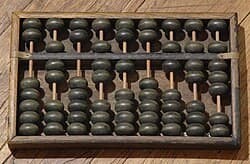
SuanpanChinese bead abacus, 2 upper / 5 lower beads
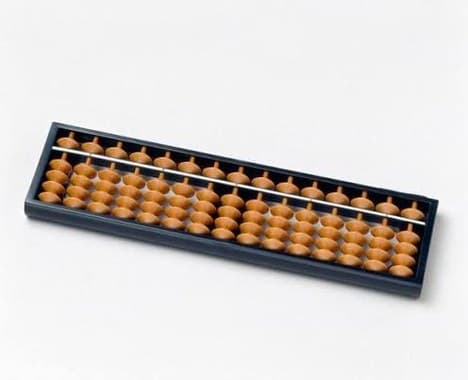
SorobanJapanese 1 upper / 4 lower — today's standard
Where the word comes from

The Meaning & Origin of “Abacus”

To understand the modern abacus, it helps to start with its name. The word “abacus” comes from the Greek abax or abakon, meaning “table” or “tablet” — most likely borrowed from a Semitic word abaq, meaning “dust” or “sand.” That single detail tells the whole origin story: the earliest “abacus” was not a frame of beads at all, but a flat board covered in fine sand, on which columns were drawn and pebbles or fingers marked numbers. From counting in the dust to counting in the mind, the abacus has been humanity’s calculating companion for roughly three thousand years.

The Journey

A Visual Timeline of the Abacus

Follow the abacus as it travels from the Middle East across the ancient and medieval world, each culture reshaping it for speed and clarity.

1
The Sumerian Sand Board
c. 2700–2300 BCE · Mesopotamia

The Sumerian Sand Board

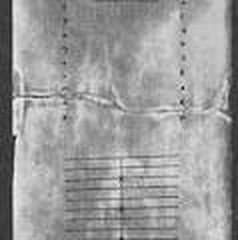
In ancient Sumer, scribes divided sand-covered boards into columns, each column standing for a different numerical place. This “proto-abacus” let the Babylonians add and subtract large numbers long before pen and paper — the true birthplace of calculating tools.

2
The Salamis Tablet
c. 300 BCE · Greece

The Salamis Tablet

Discovered on the Greek island of Salamis, this marble slab (about 150 cm long) is the oldest surviving counting board in the world. Greeks and Romans placed pebbles — calculi in Latin — into ruled columns, giving us the very word “calculate.”

3
The Roman Hand-Abacus
c. 1st Century CE · Rome

The Roman Hand-Abacus

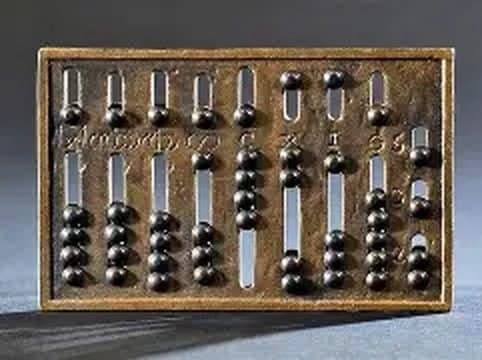
Rome miniaturised the idea into a portable bronze board with grooves that held sliding beads — an early “pocket calculator” for merchants and engineers across the empire. Its groove layout foreshadowed the upper/lower-bead design still used today.

4
The Suanpan (算盤)
c. 190 CE – Ming Dynasty · China

The Suanpan (算盤)

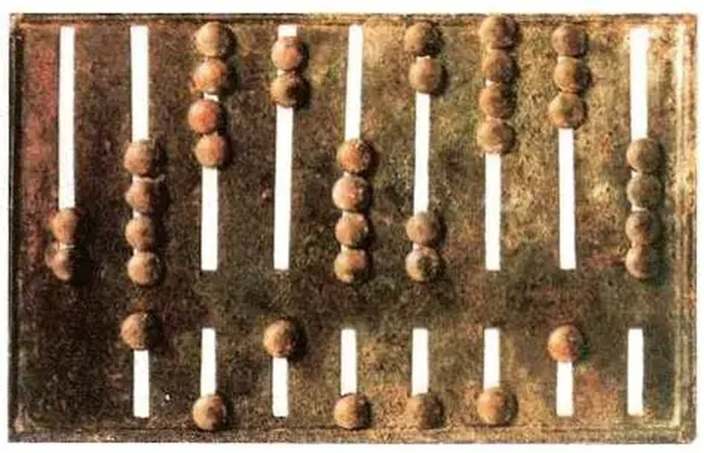
The bead-and-rod abacus reached full form in China. First described around 190 CE and in common use by the Ming dynasty, the suanpan carried 2 beads above and 5 below the beam — enough to handle multiplication, division and even roots at remarkable speed.

5
The Soroban (そろばん)
14th–20th Century · Japan

The Soroban (そろばん)

Imported from China around the 14th century, the Japanese soroban was streamlined for pure speed — refined over centuries and standardised in the 1900s to just 1 bead above and 4 below, with slim, fast-moving beads. This 1:4 design is the abacus taught in Mastermind classes today.

6
20th Century – Today · Worldwide

From Calculator to Brain Tool

Even after electronic calculators arrived, the abacus never disappeared. Trained students learn Anzan — visualising the beads in their mind — turning the device into a full brain-development method that sharpens memory, focus and calculation speed in children across the globe.

Design evolution

Suanpan vs. Soroban: How the Abacus Got Faster

The single biggest leap in abacus history was the move from the Chinese 2/5 layout to the Japanese 1/4 layout — fewer beads, faster fingers, cleaner logic.

China
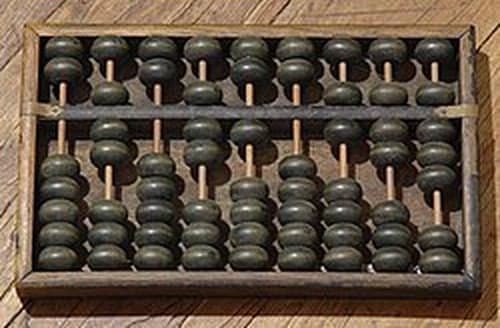
Chinese suanpan abacus with a 2/5 bead arrangement

Suanpan · 2 / 5

Two heaven beads, five earth beads per rod. Powerful and flexible — but with more beads to move for everyday sums.

Japan
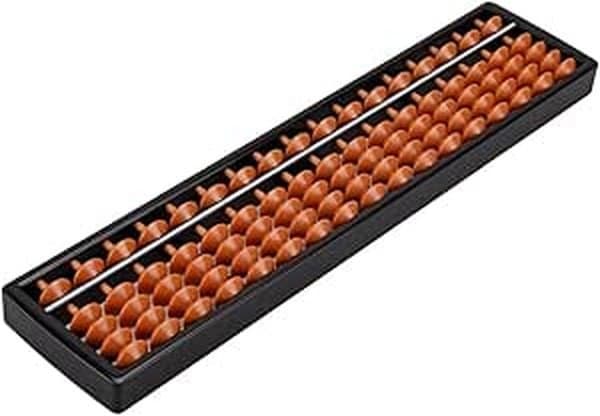
Japanese soroban abacus with the modern 1/4 bead arrangement

Soroban · 1 / 4

One heaven bead, four earth beads per rod. Fewer movements, faster mental mapping — the modern standard for competitive mental maths.

A moment in history · 1946

The Day the Abacus Beat the Calculator

In November 1946, Tokyo hosted a now-famous contest between a Japanese soroban champion and an operator of the most advanced electric calculating machine of the age. Over rounds of addition, subtraction, multiplication and division, the soroban won the majority — proving that a 3,000-year-old tool, in trained hands, could out-calculate cutting-edge technology.

“The machine had power. The abacus had a trained mind behind it — and that made the difference.”

That is the real lesson of abacus history: the tool matters, but the brain it trains matters more. It’s the exact principle Mastermind Abacus is built on.
Why this history matters for your child

From an Ancient Calculator to Modern Brain Development

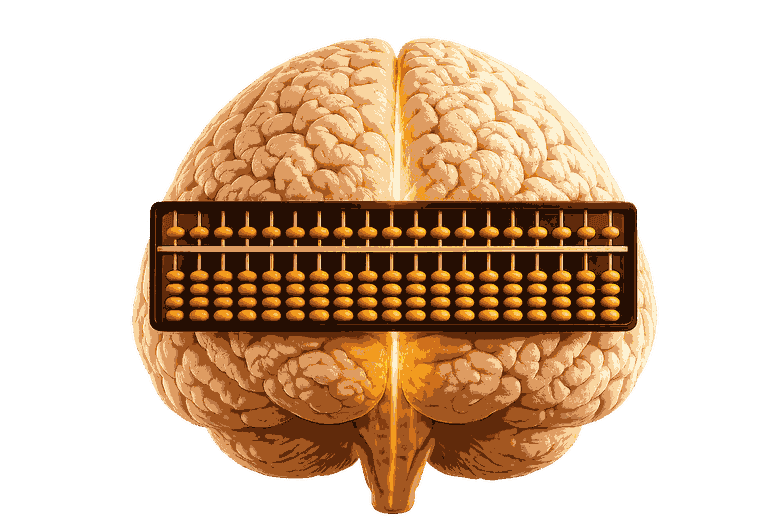
Mastermind Abacus keeps the ancient soroban at its heart but pairs it with a modern, age-appropriate teaching method. As children learn to picture and move the beads mentally, both sides of the brain are engaged — building skills that last far beyond maths class.

  • Faster, more confident mental calculation
  • Sharper concentration and memory
  • Stronger visualisation and problem-solving
  • A love for numbers that boosts overall confidence
Find a Class Near Me
A human brain with an abacus across it, symbolizing abacus training's effect on brain development

Key Takeaways: History of the Abacus in Brief

  • Oldest calculator: The abacus is the world's first calculating device, with roots in Mesopotamia around 2700–2300 BCE.
  • Name origin: “Abacus” comes from the Greek abax (“table”), likely from a Semitic word for dust or sand.
  • Oldest surviving board: The marble Salamis Tablet (c. 300 BCE) is the earliest counting board ever found.
  • Bead form matured in China: The suanpan (2 upper / 5 lower beads) reached full form and spread widely by the Ming dynasty.
  • Refined in Japan: The soroban (1 upper / 4 lower beads) became the fast, modern standard used today.
  • Now a brain tool: Through mental-abacus (Anzan) training, the device today develops children's memory, focus and calculation speed.
Common Questions

History of Abacus — FAQs

No single person invented the abacus. Its earliest form appeared in ancient Mesopotamia (Sumer) around 2700–2300 BCE as a sand-and-line counting board, and it was independently developed and refined across Greece, Rome, China and Japan over thousands of years.
The abacus is roughly 4,000–4,700 years old if you count the earliest Mesopotamian counting boards (c. 2700 BCE). The oldest surviving physical counting board, the Salamis Tablet, dates to about 300 BCE.
It comes from the Greek abax / abakon, meaning “table” or “tablet,” likely borrowed from a Semitic word abaq meaning “dust” or “sand” — a reference to the sand boards on which the earliest calculations were made.
The Chinese suanpan has 2 beads above the beam and 5 below (2/5). The Japanese soroban was streamlined to 1 bead above and 4 below (1/4), which makes calculation faster and is the design most abacus students learn today.
Most modern abacus and mental-maths programs — including Mastermind Abacus — use the Japanese soroban (1/4 bead design) because of its speed and clean logic.
Beyond calculation, learning the abacus trains children's mental visualisation, memory and focus. Through “Anzan” (mental abacus), students perform rapid calculations in their head — a proven brain-development benefit a calculator cannot provide.
Children can begin as early as 5 years of age — Mastermind's early-years Lingo Bingo program builds number sense at ages 5–6, and the core Mastermind Abacus program is designed for children aged 6–14, once they recognise numbers. So the ideal window is 5 to 14.
Continue the 3,000-year journey

Give Your Child the Abacus Advantage

The same tool that shaped ancient minds can sharpen your child’s memory, focus and calculation speed today. See it in action — completely free.

Find Abacus Classes Near Me
Call Us