Abacus classes in New York City — live online mental math for ages 6–14
Your child has already travelled today. This class does not ask them to do it again: it starts wherever they are, with four children to a certified teacher and ten graded levels. Mastermind has taught this since 2005. The first class is free.

Book a free demo class
No fees. No obligation. See your child learn live.
Or message us directly on WhatsApp.
By four o’clock your child has already made the journey
New York gives families an unusual amount of school choice — zoned schools, magnets, gifted programs, dual language, a few hundred charters, and a high school process where a student can rank programs anywhere in the city. The consequence is that a great many children do not attend school in their own neighbourhood. Plenty cross a borough line twice a day to get there.
An after-school class across town then asks for a third and fourth trip, usually in the dark half the year, often with an adult who has to go along and wait out the hour somewhere. Student MetroCards cover a limited number of trips and only on school days, so a Saturday class is its own separate arrangement.
None of that is an argument about quality. It is an argument about what actually survives February. A class that begins wherever your child already is has a much better chance of still happening in week twelve — which is the only version of a ten-level program that is worth starting.
Six things the program is actually building
The bead frame is a device for getting somewhere. It is used hard early and then deliberately removed.
Bead work done right
Finger movement fixed in the first level, with a teacher watching four pairs of hands rather than twenty.
Computation in the head
The frame goes away in the middle levels and the arithmetic keeps running without it.
Focus on demand
An abacus problem cannot be done while half-present, which is a useful thing to practise at six in the evening.
Holding an image
Keeping a shifting bead picture in mind is working memory, worked twice a week.
Right, then quick
Accuracy is graded before speed at every level, so pace never arrives on top of a bad method.
Numbers stop being a fight
Generally the first thing a parent notices, and it shows up at homework rather than on a report.
These are what parents typically describe across the levels; reaching them depends on attendance and a short daily practice. Read the research on abacus training →
Students partway and at the end
Enrolled Mastermind students in live classes, at Levels 3, 5 and 10. Watch how little visibly happens by the last one.
What the week asks of you
A free hour, and a level
One live class, after which the teacher names a starting level. A child who has used an abacus before is assessed onto the right one instead of starting over.
Two live hours, Eastern Time
On Mastermind’s own portal, built around timed rounds and bead races. Four children, one certified teacher, the same one each week.
A kit that fits an apartment
An abacus about the size of a hardback, the level workbooks and a Parent Handbook. The student app and free Virtual Abacus handle five to ten minutes on other days.
Ten graded levels
Each takes about a quarter and ends in an assessment. A child repeats rather than being carried along with the batch.
All that is needed: a laptop or tablet, a connection that holds and a corner of a room. The program runs year round, so the summer does not cut a level in half. More on the format: how our live online classes work.
No train, no escort, no waiting around
One free hour, at the time you would actually use it every week.
What a class across town actually takes
Two hours of teaching a week is the easy part to plan. This is the rest of it.
| Per class | Live online | A class across town |
|---|---|---|
| Trips for your child | None — they are already home | Two more on top of the school run |
| An adult’s time | None required | Escort there, wait, escort back |
| Weekend classes | Same as any other day | A separate fare arrangement |
| January at 5pm | Makes no difference | Dark, cold, and the first thing to be skipped |
| When homework starts | Straight after the hour | Whatever is left after the trip back |
| Children per teacher | Four, every session | Whatever that room holds |
| Checking it first | A full free hour | Varies |
This compares Mastermind’s online format with attending in person across the city. Many in-person classes are excellent — the travel is simply the part that gets underestimated in September and decides things by February.
Whatever school your child ended up in
Few cities sort children into as many different kinds of school as this one. A family can move through a zoned elementary, a screened middle school and a charter or specialized high school, and the maths sequence shifts underneath them each time.
This program is attached to none of it. It teaches no curriculum and belongs to no district, so it does not need to know which track your child is on. What it builds is the computation all of those tracks assume is already there — and once that is quick, attention goes to the reasoning, which is where the marks are.
It also means a change of school, borough or city leaves your child’s level exactly as it was.
The ratio is the whole product
Certified, company-trained, and the same teacher week after week. In a city where enrichment classes routinely run far larger, this is the number worth comparing.
Teaching Abacus isn't just my job—it's my daily source of pride.
Harsha BanthiyaB.Tech and B.Ed
Nothing feels better than shaping young minds and making parents proud.
Amrisha DubeyMBA
Abacus teaching gave me purpose—I feel proud of every small achievement.
Sonali GahoiM.A. (English)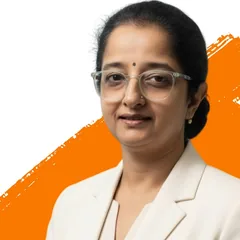
My students' confidence and calculation speed amazed parents within just weeks!
Kanta SarkarPost Graduate
Students' focus and confidence improved so much that parents often thank me!
Ayushi SharmaPost Graduate
Every child's progress gives me deep satisfaction as an Abacus teacher.
Khyati MalhotraMBA
Children from six to fourteen, in any borough
- Long school commute already — the most common reason families here move a class online
- Complete beginners — counting and following instructions is the whole prerequisite
- Strong at math and unstretched — the upper levels are hard on purpose
- Quick but careless — accuracy is graded before speed at every level
Try it on a normal Tuesday
Not a quiet one — the real one, after the train, when everyone is tired. That is the evening the class has to survive, and an hour with a certified teacher will tell you whether it can. Your child does the work; nobody presents anything at you; the fees come afterwards.
How the hour goes
- Pick an Eastern Time slotTell us which evenings work once your child is home.
- They take a real classA full hour with a certified teacher. Stay and watch.
- You get a placementWhich of the ten levels to start at, and what it involves.
- Then you decideFees at the end. Saying no is an ordinary outcome.
Abacus classes in New York City — the essentials
- What it is: a ten-level abacus and mental math program taught live online across the five boroughs.
- Why online here: most children already commute to school, and the class does not ask for a second journey.
- Ages: six to fourteen, beginners and children continuing from elsewhere.
- Class size: four children to one certified teacher, every session.
- Timings: after-school weekday and weekend slots in Eastern Time.
- What it is not: admissions-test preparation — it teaches no test and no curriculum.
- To start: one free hour, fees afterwards, no obligation.
The questions that come up
My child already travels to school. Is an online class really less tiring?
That is exactly the reasoning most families here arrive with. A child who has already done forty minutes each way has spent a real part of their day moving, and an after-school class across town asks for a third and fourth trip. Online, the class starts wherever they already are - which on a February evening is usually the difference between attending and not.
Do you have a location in Manhattan or Brooklyn?
No, and it is a deliberate choice rather than a gap. We teach New York families live online, which removes the second journey altogether and means an adult does not have to escort a child across town and wait through the hour.
Which boroughs do you cover?
All five, on identical terms - Manhattan, Brooklyn, Queens, the Bronx and Staten Island, plus Westchester, Long Island and northern New Jersey. There is no zone, no catchment and no travel involved.
What times can we book?
After-school weekday slots and weekend slots, in Eastern Time. You choose the day and hour when you book, which matters when a child gets home at a different time depending on the train.
My child is in a G and T program, a charter and a zoned school in different years. Does that matter?
Not at all. This program is tied to no school, district or admissions track. It teaches no curriculum - it builds the computation that every curriculum assumes a child already has, so it sits underneath whatever school they are in this year.
Is this preparation for any admissions test?
No. We do not teach to any test and would rather say so plainly. What the program builds is calculation that is quick and reliable, which is a general capability rather than exam practice. If you want rehearsal for a specific test format, that is a tutor's job.
Four children per class - is that really every session?
Every session, with a certified teacher who takes the same batch each week. In a city where enrichment classes routinely run much larger, it is the single thing we would ask you to compare.
Which ages do you take, and what are the fees?
Six to fourteen. Fees depend on the level and batch and are shared after the free class, along with the Eastern Time slots available. There is no obligation to enroll.
How long does the whole program run?
Ten levels of about three months each, two live hours a week, with a graded assessment closing every level. Children advance on finishing a level rather than on a school calendar.
The class comes to your child, not the other way round
One free hour with a certified teacher, from whichever borough you are in.