Abacus classes in Milton Keynes — live online mental maths for ages 6–14
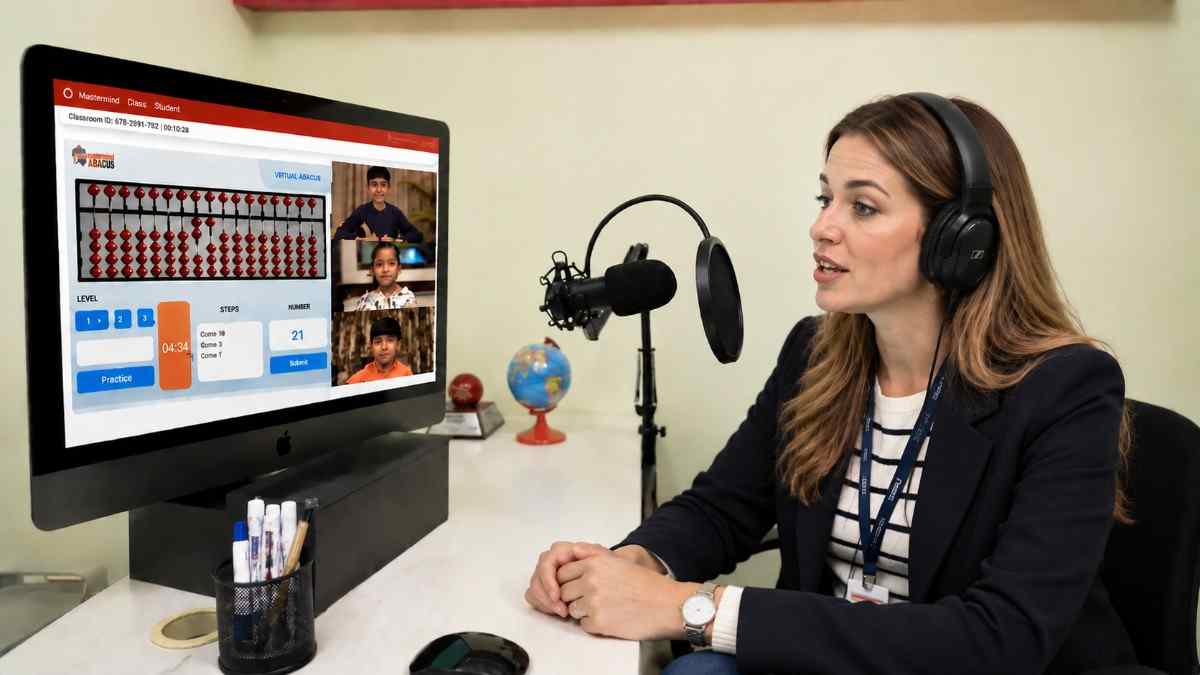
Children who learn abacus stop reaching for paper. They start on a physical frame, and partway through the levels they set it aside and keep calculating mentally — quicker than before, and steadier, because accuracy is trained before speed. The habit of holding attention on one thing tends to come with it. Lessons are live, never recorded, and they run on Mastermind’s own gamified portal rather than a general video-call tool. One certified tutor works with four children at a time, which is what keeps it a classroom instead of a screen.
Book a free demo class
No fees. No obligation. See your child learn live.
Or message us directly on WhatsApp.
Joining part-way is the normal case here, not the exception
Milton Keynes has been growing since it was designated a new town in 1967, and it is still one of the fastest-growing cities in the country. The council puts it plainly: around thirteen people move here permanently every day, and more than a hundred languages are spoken in its schools.
Which means a large share of the children we are asked about did not start here. Some did abacus in India, or the Gulf, or with a provider in another English town. Their parents ask the same question every time: does any of it carry over, or are we starting from the beginning again?
Mostly it carries over. We assess rather than assume — technique first, then what the child can do off the frame, then speed under a timer — and place them where they actually are. Sometimes higher than expected. Occasionally a level lower, because a finger habit needs repairing before it hardens. You get the reasoning either way.
Six things the programme is for
Whether a child starts at Level 1 or joins at Level 4, these are what the remaining levels are working towards.
Technique, checked not assumed
A child arriving from another programme has their finger method looked at first, because that is what is hardest to unpick later.
Calculation without the frame
From the middle levels the abacus is set aside and the same sums continue in the head.
Attention that holds
A sum falls apart the moment focus does, which makes the practice self-correcting.
Holding a moving picture
Keeping a changing bead image in mind is working memory, trained twice a week.
Accuracy before pace
Graded at every level, so a child who is fast and wrong is caught rather than promoted.
Something familiar to hold on to
For a child who has just changed everything, a subject they already partly know is worth more than it sounds.
These are what parents tend to describe over the levels. Reaching them rests on attending and on a few honest minutes of practice a day. Read the research on abacus training →
Students at Levels 3, 5 and 10
Enrolled Mastermind students, filmed in class. Useful if you are trying to work out roughly where your own child might sit.
How a child is placed and what follows
The assessment, inside the free hour
Technique, then work off the frame, then speed under a timer. A complete beginner simply starts at Level 1; everyone else is placed against what they can currently do.
A batch at that level
Four children, one certified tutor, two live hours a week on Mastermind’s own portal. Batches form on levels, not on the school calendar.
The kit arrives
An abacus, the workbooks for that level and a Parent Handbook, plus the student app and free Virtual Abacus for five to ten minutes on other days.
Onward, one graded level at a time
About three months each, closing with an assessment. A child repeats a level rather than being carried along, which matters most for someone who joined part-way.
Equipment: a laptop or tablet, a steady connection and a corner where nobody interrupts. Terms play no part in the schedule, so half term and the summer pass without a level being cut in half. More on the format: how our live online classes work.
Find out what your child already has
The free hour includes the assessment. Even if you go no further, you will know where they stand.
What a newly arrived family has to queue for
Moving to a fast-growing city means waiting lists for a lot of things. This is one of the few that has none.
| Arriving mid-year | This programme | A typical local class |
|---|---|---|
| When you can start | As soon as your child is placed | Often the next term or intake |
| Prior learning | Assessed and credited | Frequently restarted from the beginning |
| Where you live | Any grid square, no catchment | Whatever is reachable from your estate |
| Waiting list | Placement decides it, not a queue | Common in a growing city |
| If you move again | Nothing changes | Usually means starting over |
| Class size | Four children, fixed | Varies with demand |
| Before you commit | A free hour, assessment included | Varies |
This describes Mastermind’s format against the common pattern of term-based local classes. Providers differ — if your child has learned abacus before, ask any of them how prior learning is assessed.
Bletchley, Wolverton, Stony Stratford, CMK — all the same to us
Milton Keynes was laid out as roughly one-kilometre grid squares, each with its own local facilities, which is excellent for most things and irrelevant to this one. Children join from Central Milton Keynes, Bletchley, Wolverton, Stony Stratford, Newport Pagnell and the villages beyond on identical terms.
The school makes no difference either. Every state primary and academy here works to the same national curriculum, and this programme teaches no syllabus at all — it builds the arithmetic fluency the curriculum assumes a child already has. That is precisely why it transfers so cleanly between countries and systems.
Certified tutors, trained in house
The tutor who places your child is the one who then teaches them, with four children in the class.
Teaching Abacus isn't just my job—it's my daily source of pride.
Harsha BanthiyaB.Tech and B.Ed
Nothing feels better than shaping young minds and making parents proud.
Amrisha DubeyMBA
Abacus teaching gave me purpose—I feel proud of every small achievement.
Sonali GahoiM.A. (English)
My students' confidence and calculation speed amazed parents within just weeks!
Kanta SarkarPost Graduate
Students' focus and confidence improved so much that parents often thank me!
Ayushi SharmaPost Graduate
Every child's progress gives me deep satisfaction as an Abacus teacher.
Khyati MalhotraMBA
Children aged six to fourteen, wherever they started
- Learned abacus elsewhere — assessed and placed, not restarted
- Stopped part-way and want to resume — common after a move, and easier than parents expect
- Complete beginners — counting and following instructions is the whole requirement
- New to the country — the arithmetic is the same everywhere, whatever the school system was
An assessment, whether or not you continue
A live class with a certified tutor on the portal our students use, and at the end of it a straight answer: this is the level your child is at, this is why, and this is what the next level asks. If you had them learning elsewhere before, that answer is worth having regardless of what you decide next.
How the hour goes
- Tell us the historyWhere your child learned before, how far they got, and when they stopped.
- They work, liveA full hour with a certified tutor. Stay and watch it.
- The placement, with reasonsTechnique, work off the frame, speed — and the level that follows from all three.
- You decide afterFees come at the end. Declining costs nothing and happens often.
Abacus classes in Milton Keynes — the essentials
- What it is: a ten-level abacus and mental maths programme taught live online across Milton Keynes.
- Joining part-way: children who learned abacus elsewhere are assessed and placed at their actual level, not restarted.
- Ages: six to fourteen, beginners included.
- Group size: four children to one certified tutor.
- Starting: batches form on levels, not terms, so there is no intake date to wait for.
- Timings: after-school weekday, evening and weekend slots in UK time.
- Language: classes are taught in English.
- To begin: one free hour including the assessment, fees afterwards, no obligation.
Questions about joining part-way
My child did abacus in another country. Does any of it count?
Usually a good deal of it. We assess rather than assume: the tutor looks at finger technique, at what the child can do off the frame, and at speed under a timer, then places them at the level that matches. Sometimes that is higher than the parent expected, sometimes a level lower because the technique needs repair first. Either way you get the reasoning, not just a number.
The method looked different from yours. Is that a problem?
Not usually. Abacus methods differ in detail across providers and countries, and children adapt faster than parents expect. Where a habit does need correcting, it is far easier at Level 3 than at Level 7, which is exactly why the assessment happens before enrolment rather than after.
We have only just moved to Milton Keynes. Do we have to wait for a term to start?
No. Batches are formed on levels rather than terms, so a child joins when they are placed. There is no September intake to wait for and no half-term boundary to work around.
Which parts of Milton Keynes do you cover?
All of it, equally - Central Milton Keynes, Bletchley, Wolverton, Stony Stratford, Newport Pagnell and every grid square in between, plus the surrounding villages. The classes are online, so which side of a V road you live on makes no difference at all.
English is our second language at home. Will the class work?
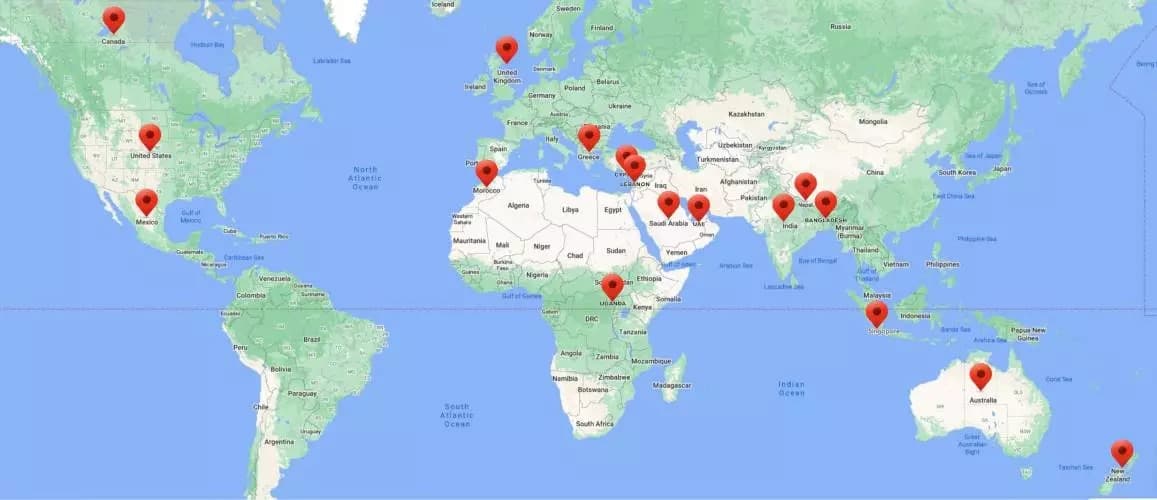
Over a hundred languages are spoken in Milton Keynes schools, and we teach children across 17 countries, so this is ordinary rather than unusual. Classes are taught in English and the arithmetic itself is language-neutral - but a child does need enough English to follow a live tutor.
What if we move again, within MK or away from it?
Nothing changes. No catchment, no premises, no travel - the class, the tutor and the level stay exactly as they are.
What times can we have?
After-school weekday, evening and weekend slots in UK time. You pick when you book, and if the pattern of your week changes, ask about moving batches rather than letting attendance drift.
What ages, and what does the whole thing involve?
Six to fourteen. Ten levels of roughly three months each, two live hours a week, with a graded assessment closing every level. Fees depend on the level your child is placed at and are shared after the free class.
Is there a centre we could visit instead?
Our teaching here is online rather than through a local centre. For a family still finding its way around a new city, that tends to be the simpler option - there is nothing to locate and nothing to get to.
Find out what your child already has
One free class, one honest placement, and no term to wait for.