Abacus classes in Manchester — live online mental maths for ages 6–14
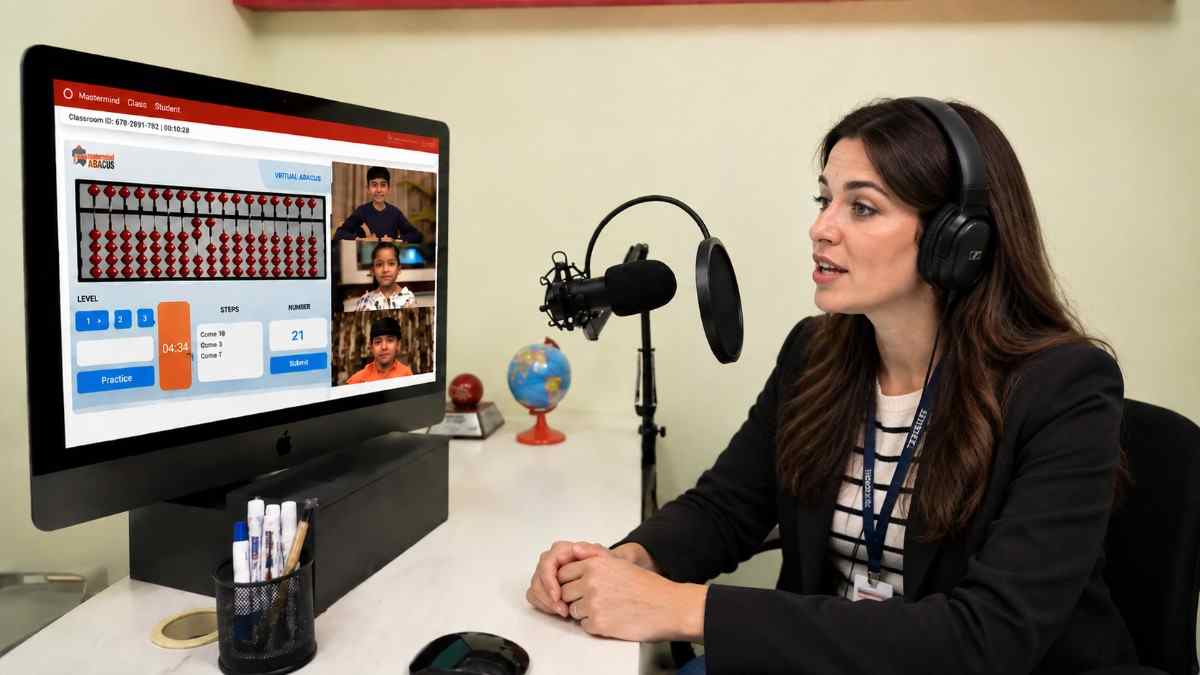
Abacus does something ordinary maths practice does not. A child learns the beads, then learns to picture them, and before long the sums that used to need paper are being worked out in their head — faster, and with fewer slips. Most parents notice the concentration before they notice the speed. Classes are live and taught on our own gamified abacus portal, built for this one subject rather than an ordinary video call, with four children to one certified tutor. Bead races, timed rounds, the same tutor every week: a real classroom, running from your front room.
Book a free demo class
No fees. No obligation. See your child learn live.
Or message us directly on WhatsApp.
Ten levels is two and a half years of somebody’s childhood
Abacus is often sold as though the decision is about the first term. It is not. The mental calculation — the thing parents actually want — arrives in the middle levels, which means a child has to still be going eighteen months after the novelty has worn off.
In that time a Greater Manchester family will plausibly move house, change school, change working hours, or all three. Across the ten boroughs people move between towns far more readily than they change city, and any commitment pinned to one building tends not to make the journey with them.
So the question worth asking is not whether a programme is good in October. It is what happens to it in the second year. Mastermind has run this one since 2005, through 1,000+ centres and a portal built for the subject: levels rather than terms, graded assessments, four children to a tutor, and nothing that depends on staying in the same postcode.
Six things at the end of the ten levels
The bead frame is scaffolding, used hard and then taken down. These are what is meant to be standing afterwards.
A method that holds
Bead and finger movement set correctly at the start, because a habit formed in week three is still there in year two.
Calculation off the frame
By the middle levels the abacus is gone and the same arithmetic runs in the head.
Concentration, repeatedly
Two focused hours a week for two years does something no half-term burst can.
Working memory
Holding a bead image steady while it changes, over and over, until it is ordinary.
Accuracy that survives speed
Each level is graded on both, and the grading is what stops a child racing ahead badly.
Something finished
Completing ten levels is, for many children, the longest thing they have ever seen through.
These are what parents tend to describe by the later levels. Getting there rests on turning up and on a short, honest daily practice. Read the research on abacus training →
Students who kept going
Enrolled Mastermind students at Levels 3, 5 and 10. The gap between the first and the last is roughly the two years this page is about.
Levels, not terms
A free hour, and an honest placement
One live class, then the tutor names a level. A child who has done abacus before is assessed onto the right rung rather than started again from the bottom.
Two live hours a week
Timed rounds and bead races on Mastermind’s own portal, four children to a tutor. The format is built to stay tolerable over years, not just weeks.
Practice that fits a school night
An abacus, workbooks and a Parent Handbook arrive at home; the student app and free Virtual Abacus keep the daily stint to five or ten minutes.
A graded assessment at every level
Ten of them. A child repeats a level rather than being carried along by the batch, which is the only reliable check on a long programme.
What you need: a laptop or tablet, a connection that holds, somewhere quiet. Classes run through half term and the holidays, so a level is never broken across a break. More on the format: how our live online classes work.
Start with one hour, not with two years
A free class, an honest placement, and a clear idea of what you would be taking on.
What usually ends it before Level 10
Very few children stop because abacus turned out to be wrong for them. These are the actual reasons, and how the format answers each.
| What happens | On this programme | Where it often ends things |
|---|---|---|
| The family moves | Nothing changes — no catchment, no premises | A new provider, and usually a restart |
| Working hours change | Move to a batch that fits the new week | The slot no longer works |
| A month off ill | Resumes at the level, not at the batch | Returns to find the class has moved on |
| Long school holidays | Levels continue across them | A six-week gap, then a rusty restart |
| The child plateaus | Repeats the level, with the assessment as evidence | Carried along, until the parent notices |
| Attention drifts in year two | One of four, so drift is visible immediately | Easy to hide in a larger group |
| Before any of it | A free hour to see the format first | Varies |
This describes Mastermind’s format against the common failure points of long after-school programmes generally. Individual providers differ — the questions are worth putting to any of them.
Didsbury, Chorlton, Prestwich, Sale — no difference to us
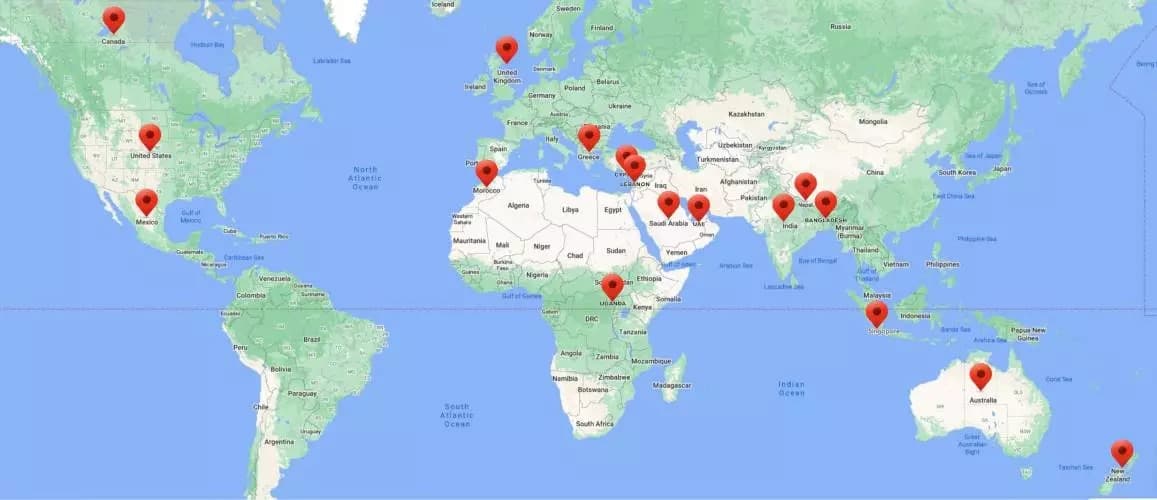
Greater Manchester is ten boroughs, and families here identify with their own town far more than with the conurbation. That matters when choosing a class in person, because provision clusters unevenly — and it matters not at all when the class is online.
Nor does the school. Every state primary and academy across the region works to the same national curriculum, and this programme teaches no syllabus at all. It builds the arithmetic fluency that the curriculum assumes a child already has, so it sits underneath whatever school is doing that term.
Which is also why moving between boroughs, or changing school mid-programme, leaves your child’s level untouched.
Certified, trained in house, and consistent week to week
Four children in front of one tutor. Over a long programme that consistency is doing more work than any single lesson does.
Teaching Abacus isn't just my job—it's my daily source of pride.
Harsha BanthiyaB.Tech and B.Ed
Nothing feels better than shaping young minds and making parents proud.
Amrisha DubeyMBA
Abacus teaching gave me purpose—I feel proud of every small achievement.
Sonali GahoiM.A. (English)
My students' confidence and calculation speed amazed parents within just weeks!
Kanta SarkarPost Graduate
Students' focus and confidence improved so much that parents often thank me!
Ayushi SharmaPost Graduate
Every child's progress gives me deep satisfaction as an Abacus teacher.
Khyati MalhotraMBA
Children aged six to fourteen, with time ahead of them
- Starting young — a six or seven-year-old has room for the whole programme before secondary school
- Starting later — older children move through the early levels faster, but begin at Level 1 like everyone
- Picked it up and dropped it before — usually a timing problem rather than an ability one
- Needs something of their own — a levelled programme gives a child progress they can see
One hour tells you more than this page can
A real class on the portal our students use, run by a certified tutor, with your child doing the work. Nothing is sold at you. Watch whether the format looks like something your child could still be doing in eighteen months — that is the honest test, and it is free.
How the hour goes
- Tell us your weekThe days that work, and whether they change; we come back with open slots.
- A full live classOne hour with a certified tutor. Stay and watch all of it.
- A placement, with reasonsWhich level, why that one, and what it will ask of your child.
- Fees and the long viewCosts afterwards, plus how the levels run. No obligation.
Abacus classes in Manchester — the essentials
- What it is: a ten-level abacus and mental maths programme taught live online across Greater Manchester.
- How long: roughly three months per level, so about two and a half years for the full programme.
- Ages: six to fourteen, beginners and children resuming from elsewhere.
- Group size: four children to one certified tutor.
- Timings: after-school weekday, evening and weekend slots in UK time.
- If life changes: moving house, changing school or changing shifts does not interrupt a level.
- To start: one free hour, fees afterwards, no obligation.
Questions about the long run
Two and a half years sounds like a lot. Can we just do a few levels?
You can stop at any point and plenty of families do - each level is complete in itself and ends with an assessment. But it is worth knowing the shape before you start: the mental calculation really arrives in the middle levels, so stopping at Level 2 gets you a child who is good with a bead frame rather than one who can work without it.
We might move - Prestwich to Sale, or out towards Stockport. Does that end it?
No, and this is the main practical reason families here choose online. There is no catchment and no premises, so a move anywhere across Greater Manchester, or out of it entirely, changes nothing about the class, the tutor or the level.
Which parts of Greater Manchester do you cover?
All ten boroughs, identically - Manchester, Salford, Trafford, Stockport, Tameside, Oldham, Rochdale, Bury, Bolton and Wigan. Children join from Didsbury, Chorlton, Prestwich, Sale, Altrincham, Cheadle and everywhere between on the same terms.
My shifts change every few weeks. Is a fixed weekly slot realistic?
Tell us that at the start rather than after. Batches run across after-school, evening and weekend slots in UK time, and if the pattern of your week genuinely changes, speak to the team about moving to a different batch rather than letting attendance quietly slide.
What happens if my child misses a few weeks through illness?
Levels are not tied to a calendar, so a child who misses time picks up where they stopped rather than where the batch has got to. That is the practical difference between a levelled programme and a term-based class.
Is it the same tutor for the whole programme?
The same certified tutor week to week, with four children in the class. Tutors do change occasionally over two years - staff move on - but the level record and the assessments travel with your child, not with the tutor.
How do we know it is working, rather than just continuing?
Each level closes with a graded assessment, and you see the result. If a child is not ready, they repeat rather than being moved up to keep a batch together - which is the check that matters over a long programme.
What ages, and what does it cost?
Six to fourteen. Fees depend on the level and the batch and are shared after the free class. Ask the team how fees work across levels if you are thinking about the full programme.
Does it clash with what school is teaching?
No. Abacus teaches no syllabus. It builds the arithmetic fluency that the national curriculum assumes is already there, so it sits underneath school maths rather than alongside it.
Judge the format, not the promise
One free class, and an honest answer about where your child would start and how far the levels go.