Abacus classes in Houston — live online mental math for ages 6–14
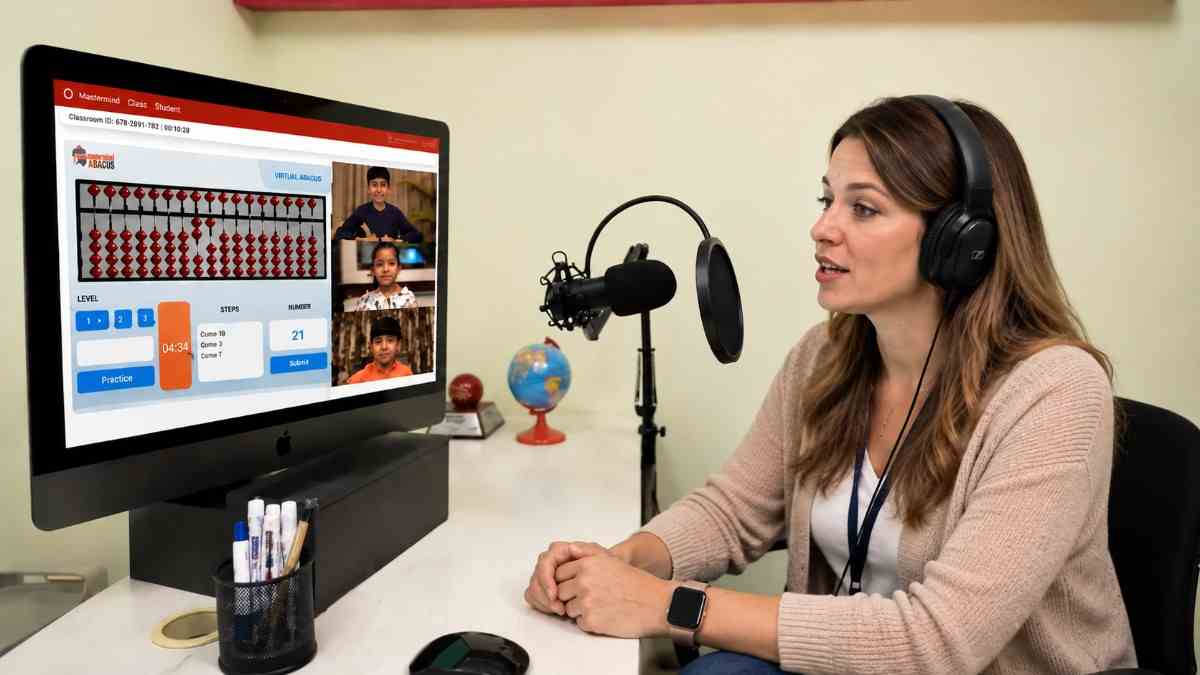
Abacus makes arithmetic automatic. A child learns the frame, then works without it, and mental math that once needed a pencil starts arriving in seconds — together with the sustained attention the method forces, since a sum falls apart the instant a child drifts. The classes are live rather than recorded, and they run on our own gamified abacus portal, not an ordinary video call. One certified teacher, four students, every single session — close enough to a real classroom that children settle into it like one, without leaving the house.
Book a free demo class
No fees. No obligation. See your child learn live.
Or message us directly on WhatsApp.
“Near me” is doing very little work in a 700-square-mile metro
Houston is enormous. The metro covers something close to seven hundred square miles and dozens of separate communities, each with its own school district, its own price bracket and its own relationship with the freeway. Ten minutes from Bellaire is forty-five from Cypress. A family in Katy and a family in Pearland are both in Houston and share almost nothing about the day.
Which is why searching for the nearest class tends to produce the wrong shortlist. Proximity is easy to measure, so it quietly becomes the deciding factor — and the things that actually determine whether a child learns anything get decided by whatever happened to be close.
Take distance out and only the real questions are left. Who is teaching. How many children they are watching. Whether the same person turns up each week. Whether progress is measured or assumed. Mastermind has answered those the same way since 2005: certified teachers, four children to a class, ten levels, a graded assessment closing each one.
Six things worth driving for — if you had to
You do not have to. But these are what the ten levels are actually for, and they are the standard any class should be measured against.
Hands, watched closely
With four children on screen a teacher can see every set of fingers, which is the one thing a crowded room cannot offer.
Working without the abacus
The frame is withdrawn in the middle levels and the computation continues mentally.
Concentration, trained
The exercise falls apart the second attention does, so children learn to hold it.
Visual memory
Keeping a moving bead picture in the head is memory practice under another name.
Accuracy, then pace
Both are graded at each level, so speed never arrives at the cost of getting it right.
Ease with numbers
Usually visible at the kitchen table long before it shows on a report card.
These are what parents typically describe over the levels; reaching them depends on attendance and a short daily practice. Read the research on abacus training →
Students at three stages of the program
Enrolled Mastermind students in live classes. This is the evidence that matters more than a map pin.
What a week looks like
A free class and a starting level
One live hour, after which the teacher names the level. A child who has used an abacus before is assessed onto the right one rather than started over.
Two live hours, Central Time
On Mastermind’s own portal, built around timed rounds and bead races. Four children, one certified teacher, the same one each week.
The kit arrives by mail
An abacus, the level workbooks and a Parent Handbook, plus the student app and free Virtual Abacus for five to ten minutes on other days.
Ten levels, each graded
Roughly three months apiece, closing with an assessment. Children advance on finishing a level rather than on a district calendar.
All it takes at home: a laptop or tablet, a connection that holds and a quiet corner. The program runs year round, so summer does not interrupt a level. More on the format: how our live online classes work.
No drive, no deposit, one free hour
Book it at the time you would actually use every week and judge the class on its merits.
The things proximity quietly decides for you
When the nearest option wins by default, these are the questions that never get asked.
| The question | Answered here | Decided by whatever is closest |
|---|---|---|
| How many children per teacher | Four, every class, no exceptions | Whatever that room holds |
| Who teaches | A certified, company-trained teacher, the same one weekly | Whoever that location employs |
| How progress is measured | A graded assessment closing each of ten levels | Varies, and often not at all |
| What happens over summer | Levels continue | Frequently closes for the break |
| The Tuesday evening cost | Nothing — nobody leaves the house | Two round trips a week, at the worst hour for them |
| If you move across the metro | Nothing changes at all | Usually a new search |
| What you can check first | A full free hour of real teaching | Varies |
This compares Mastermind’s format with choosing on proximity generally. Plenty of in-person classes are excellent — the point is that being nearest is not evidence of it, and these are the questions worth putting to any provider.
HISD, Katy, Fort Bend, Cy-Fair, Conroe — it makes no difference
The Houston metro contains more than a dozen independent school districts, and families here choose neighborhoods around them. It is one of the most consequential decisions a Houston parent makes, and it has no bearing whatsoever on this program.
Abacus teaches no district curriculum and no state standards. It builds the computation that every one of those districts assumes a child already has, which is why it sits underneath all of them equally — and why crossing a boundary, changing schools, or moving from the Loop out to Cypress leaves your child’s level untouched.
The teacher, which is what you are actually buying
Certified, trained in house, and consistent week to week — with four children in front of them rather than a room full.
Teaching Abacus isn't just my job—it's my daily source of pride.
Harsha BanthiyaB.Tech and B.Ed
Nothing feels better than shaping young minds and making parents proud.
Amrisha DubeyMBA
Abacus teaching gave me purpose—I feel proud of every small achievement.
Sonali GahoiM.A. (English)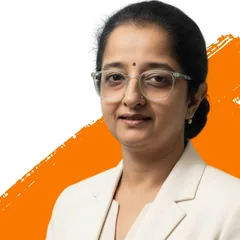
My students' confidence and calculation speed amazed parents within just weeks!
Kanta SarkarPost Graduate
Students' focus and confidence improved so much that parents often thank me!
Ayushi SharmaPost Graduate
Every child's progress gives me deep satisfaction as an Abacus teacher.
Khyati MalhotraMBA
Children aged six to fourteen, anywhere in the metro
- Beginners — counting and following instructions is the entire prerequisite
- Children who gave up on a class that was too far — a common story here, and a solvable one
- Strong students with nothing to stretch them — the upper levels are hard by design
- Children who have done abacus elsewhere — assessed and placed, not restarted
One hour, and no windshield time
A real lesson on the portal enrolled students use, taken by a certified teacher, with your child doing the work. Nobody sells at you. Sit through the whole hour — the useful question at the end is not whether they enjoyed it, but whether they were still concentrating at minute fifty.
How the hour goes
- Choose a Central Time slotTell us the days that work; we come back with what is open.
- Your child takes the classA full hour with a certified teacher. Watch all of it.
- You get a placementWhich of the ten levels, and what that level demands.
- You decide afterwardFees come at the end. Walking away costs nothing.
Abacus classes in Houston — the essentials
- What it is: a ten-level abacus and mental math program taught live online across the Houston metro.
- Where: Katy, Sugar Land, Cypress, Pearland, The Woodlands, Spring, Kingwood, Memorial, Bellaire, Alief and the inner Loop, on identical terms.
- Ages: six to fourteen, beginners and children continuing from elsewhere.
- Class size: four children to one certified teacher.
- Timings: after-school weekday and weekend slots in Central Time.
- School districts: independent of all of them — it builds the computation they assume.
- To start: one free hour, fees afterward, no obligation.
The questions that come up first
I searched for abacus classes near me. Is there anything actually near me?
Possibly, depending on which part of the metro you are in - and that is the problem with the question. Houston covers roughly 700 square miles, so what is ten minutes away in Bellaire is forty-five from Cypress. Our classes are live online, which takes proximity out of the decision entirely and leaves you judging the teaching instead.
Do you have a location in Houston we could visit?
No. We teach Houston families online rather than from a physical location, which is deliberate in a metro this spread out. There is no campus to reach and no rush-hour drive attached to a Tuesday evening class.
We are in Katy / Sugar Land / The Woodlands / Pearland. Does that change anything?
Not one thing. Katy, Sugar Land, Missouri City, Cypress, Pearland, The Woodlands, Spring, Kingwood, Memorial, Bellaire, Alief and the inner Loop are all served identically. No zoning, no boundary, no difference in what your child gets.
Our district is HISD. Someone else's is Katy ISD. Does the program differ?
No. The metro has more than a dozen independent school districts and this program is tied to none of them. It teaches no district curriculum at all - it builds the computation each of them assumes a child already has.
What times can we have, and in what time zone?
Central Time, with after-school weekday and weekend slots. You choose the day and hour when you book the free class.
My child speaks Spanish or Vietnamese at home. Is that a problem?
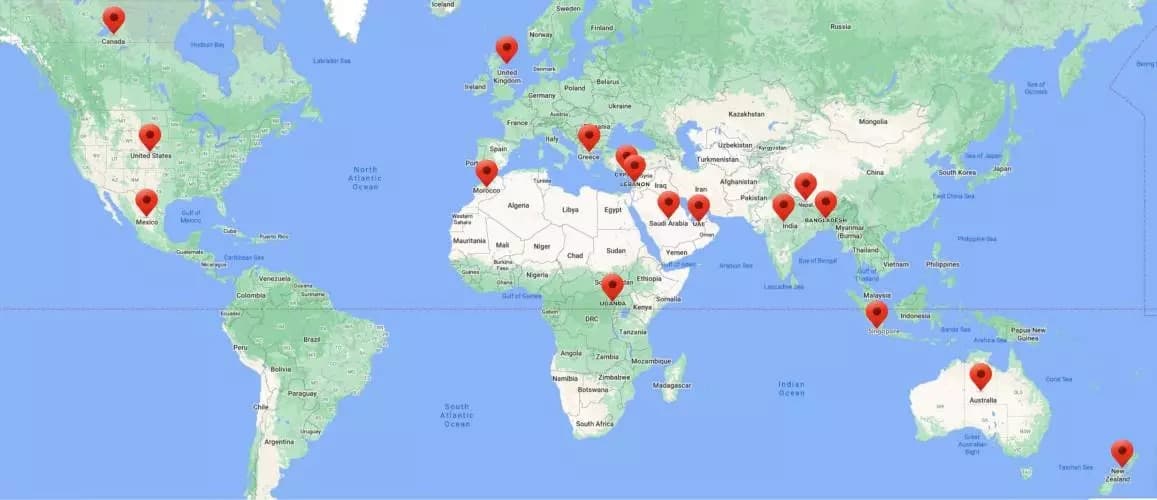
It is common rather than unusual - this is one of the most linguistically diverse metros in the country, and we teach children across 17 countries. Classes are taught in English and the arithmetic is language-neutral, but a child needs enough English to follow a live teacher.
Is the teacher the same every week?
Yes. A certified, company-trained Mastermind teacher, with four children in the class. Over a ten-level program that continuity is doing more work than any single lesson.
How long is the whole thing, and what does it cost?
Ten levels of about three months each, two live hours a week, with a graded assessment at the end of every level. Fees depend on the level and batch and are shared after the free class.
What ages do you take?
Six to fourteen. Younger children build bead technique more easily; older ones move through the first levels faster but start at Level 1 like everybody else.
Stop measuring distance. Measure the class.
One free hour with a certified teacher, from wherever in Houston you happen to be.