Abacus classes in Florida — live online mental math for ages 6–14
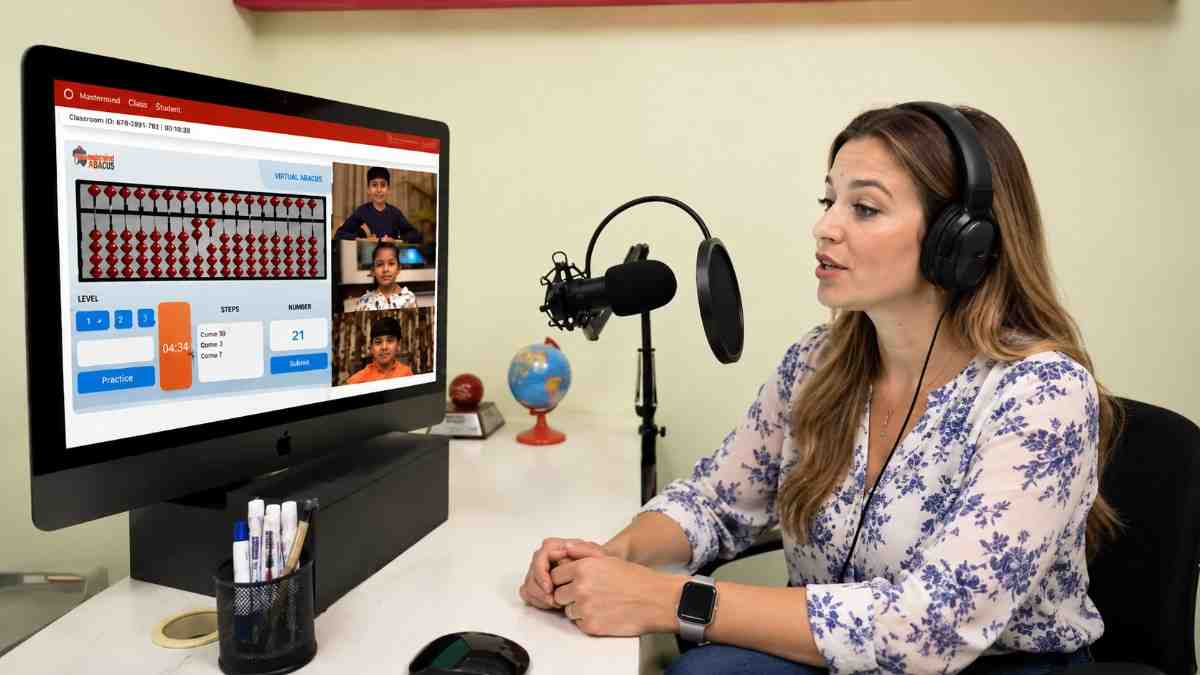
What abacus gives a child is speed with numbers and the confidence that follows it. They begin on a physical abacus, learn to carry the picture in their head, and are soon calculating mentally rather than reaching for paper or a calculator. Accuracy is built first and the pace comes after, which is the order that lasts. Lessons run live on our own gamified abacus portal — a platform made for this subject, not a video-call app — with a certified teacher and only four students in the batch. A real classroom, at home.
Book a free demo class
No fees. No obligation. See your child learn live.
Or message us directly on WhatsApp.
A school calendar here is always partly provisional
Every Florida district builds designated makeup days into its calendar — Broward reserves up to five, Flagler as many as eight. They sit on the published calendar as days off, and they only become school days if a storm has already taken some away. Families learn to read the calendar as a plan rather than a promise.
When a season is bad the arithmetic is real. Pinellas County lost forty-six and a half hours of instruction to Helene and Milton; Brevard missed four days and rebuilt its calendar afterwards. Anything a child is enrolled in outside school is caught in the same disruption, and usually with less slack to absorb it.
To be clear about our part in that: if a storm is coming, forget about us. Nobody should be thinking about an abacus class during an evacuation. What we can offer is that your child’s place is kept by level rather than by date, so three missed weeks means resuming where they stopped — not arriving back to find a group has moved on without them.
What ten levels are meant to leave behind
The abacus does its work early and is then deliberately taken away. These are what should remain afterwards.
Bead technique
Finger movement established in the first level and corrected live, because it is the foundation everything later sits on.
Computation in the head
Partway through the program the frame is set aside and the same problems are solved mentally.
Sustained attention
The exercise collapses the moment focus does, so the practice corrects itself.
Visual memory
Holding a changing bead picture in mind, repeated until it stops being effortful.
Accuracy ahead of speed
Both are graded at every level, in that order.
A place to come back to
Progress is recorded by level, so an interruption is a pause rather than a loss.
Parents generally describe these over the levels; how far a child gets depends on attendance and a short daily practice. Read the research on abacus training →
Students at three points along the way
Enrolled Mastermind students in live classes. The distance between the first clip and the last is what the ten levels cover.
What joining involves
A free hour and a placement
One live class, then the teacher names a starting level. A child who has used an abacus before is assessed onto the right one rather than sent back to the beginning.
Two live hours a week
Timed rounds and bead races on Mastermind’s own portal, four children to one certified teacher, and the same teacher each week.
Materials shipped to you
An abacus, the level workbooks and a Parent Handbook, plus the student app and free Virtual Abacus for short practice on other days.
Ten levels, each with its own assessment
Around three months apiece. Your child’s position is held at the level, which is what makes an interruption recoverable.
What is needed: a laptop or tablet, a connection that holds and somewhere quiet. If you are away from home or staying with family, logging in from there works exactly the same. More on the format: how our live online classes work.
An hour, free, at a time you choose
Meet a teacher, watch your child work, and get an honest placement.
What an interruption costs, and what it does not
Time will be lost at some point — to weather, to a move, to illness. The question is what is still there afterwards.
| After three weeks away | Here | Where progress is tracked by date |
|---|---|---|
| Where your child restarts | The point in the level they stopped at | Wherever the group has reached |
| What was lost | Three weeks of pace | Sometimes the thread entirely |
| Catching up | Not required — the level simply takes longer | Often extra sessions, or falling behind |
| If you are staying elsewhere | Log in from wherever you are | Depends on being able to get there |
| If school adds makeup days | Tell us and we move your slot | A clash you have to solve |
| Summer | Classes continue | Frequently closed |
| Before committing | A free hour, whenever suits | Varies |
This compares a level-based structure with date-based scheduling generally, not any particular provider. Many run excellent classes — worth asking any of them what happens to a child who misses a fortnight.
Whichever district you are in
Florida has an unusually tidy structure: one school district per county, sixty-seven in total, each setting its own calendar within the state’s minimum of 180 instructional days. Start dates, spring break and testing windows vary from one county to the next.
None of it affects this program, which belongs to no district and teaches no state standards. It builds the computation that every standard assumes is already reliable — so a move from Hillsborough to Duval, or from a district school to a charter, leaves your child’s level untouched.
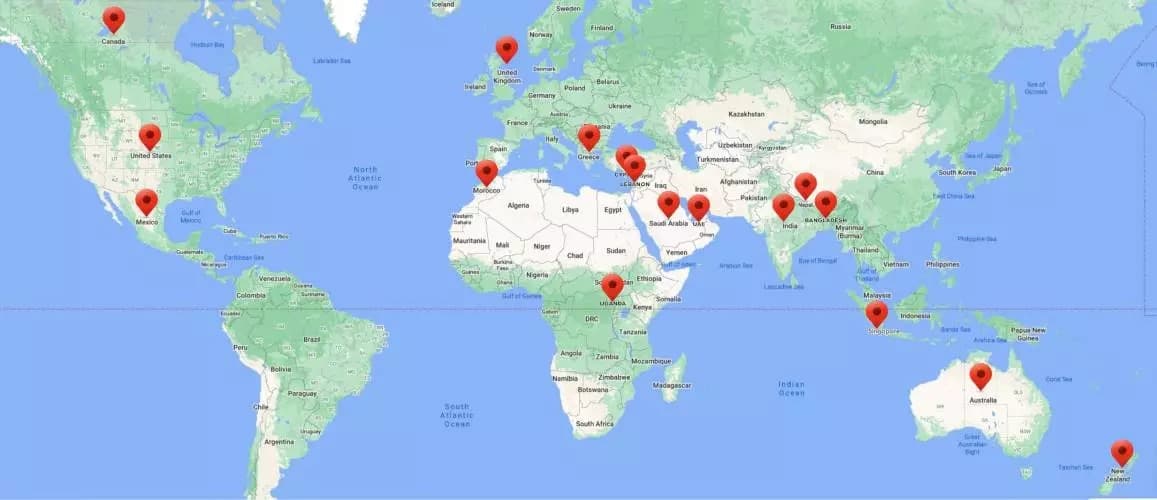
The same teacher, wherever you are logging in from
Certified and company-trained, with four children in the class. If a family is displaced or staying elsewhere for a while, none of that changes.
Teaching Abacus isn't just my job—it's my daily source of pride.
Harsha BanthiyaB.Tech and B.Ed
Nothing feels better than shaping young minds and making parents proud.
Amrisha DubeyMBA
Abacus teaching gave me purpose—I feel proud of every small achievement.
Sonali GahoiM.A. (English)
My students' confidence and calculation speed amazed parents within just weeks!
Kanta SarkarPost Graduate
Students' focus and confidence improved so much that parents often thank me!
Ayushi SharmaPost Graduate
Every child's progress gives me deep satisfaction as an Abacus teacher.
Khyati MalhotraMBA
Six to fourteen, wherever the year takes you
- Families whose year gets disrupted — the structure is built to absorb that
- Complete beginners — counting and following instructions is the whole prerequisite
- Children who are quick but inaccurate — accuracy is graded first at every level
- Returning after a break — assessed and placed, wherever they got to before
One hour before any of it is decided
A genuine class on the portal enrolled students use, with a certified teacher and your child doing the work. Nobody presents at you. You come away with a level, the reasoning behind it, and the fees — and you decide afterwards, with no date attached.
How the hour goes
- Choose a timeTell us which days work and we confirm what is open.
- A full live classSixty minutes with a certified teacher. Stay and watch.
- A placement with reasonsWhich of the ten levels, and what that level asks for.
- You decide afterFees at the end. Declining is perfectly ordinary.
Abacus classes in Florida — the essentials
- What it is: a ten-level abacus and mental math program taught live online across all 67 counties.
- If time is lost: progress is held at the level, so a child resumes where they stopped rather than where a group has reached.
- During a storm: nothing is expected of you — the level waits.
- Ages: six to fourteen, beginners and children returning after a break.
- Class size: four children to one certified teacher.
- Timings: after-school and weekend slots, Eastern or Central Time.
- Standards: independent of Florida standards and of FAST.
- To start: one free hour, fees afterwards, no obligation.
Mostly about what happens when plans break
What happens to classes if a storm closes everything?
Nothing is expected of you. If a storm is coming, look after your family and forget about us entirely - we would rather a child missed three weeks than felt they owed anyone a class during an evacuation. Your child's level is recorded, so when things settle they resume from exactly where they stopped rather than from wherever a group has since reached.
Is there a penalty for missing classes?
No. A child returns to the level they were on. Because every level ends in its own assessment, missed weeks show up as slower progress through that level rather than as a gap you have to chase.
Our district keeps converting days off into school days. Does that affect this?
Not at all, and it is worth saying plainly: the hurricane makeup days in your district's calendar have no bearing on ours. Whatever your county activates or does not activate, your class times stay as booked - and if a rescheduled school day clashes, tell us and we will move the slot.
Which parts of Florida do you cover?
All sixty-seven counties, on identical terms. Children join from Miami-Dade, Broward, Palm Beach, Hillsborough, Pinellas, Orange, Duval, Lee and Brevard the same way, because there is no location to travel to.
Which hours are available to us?
After-school and weekend slots in Eastern Time, with Central Time available for families in the western Panhandle. You choose the day and hour when you book the free class.
Is this aligned to Florida's standards, or to FAST?
Neither. The program has its own ten-level curriculum and its own assessments, and rehearses no state test. It builds the computation those standards assume a child already has.
Do you close for the summer?
No. Classes run through June, July and August, which several Florida families use to move a level along while the school calendar is quiet.
Is it the same teacher each week?
Yes, a certified and company-trained teacher, with four children in the class. If your family is displaced or travelling, the teacher and the batch stay the same wherever you log in from.
Which ages, and what does it cost?
Six to fourteen. Fees depend on the level your child is placed at and on the batch, and are shared after the free class. There is no obligation to continue.
Progress that keeps your child’s place
One free class, an honest placement, and a structure that survives a disrupted year.