Abacus classes in Dubai — live online mental maths for ages 6–14
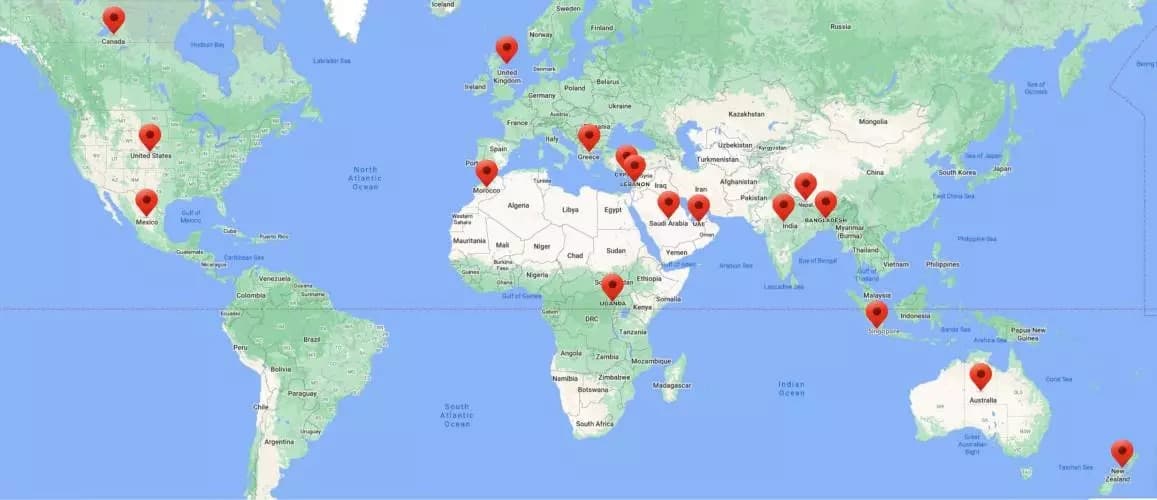
Abacus turns up on a lot of Dubai school activity lists. This is the other kind: a dedicated ten-level programme, taught live by a certified trainer to four children at a time, on Mastermind’s own portal. Since 2005, in 17 countries. The first class costs nothing.
Book a free demo class
No fees. No obligation. See your child learn live.
Or message us directly on WhatsApp.
School activity, or proper training?
Abacus is not hard to find in Dubai. It appears on school activity lists beside football and robotics, it is sold as a term package, and several centres offer it across the emirate. Finding it is not the problem. Telling the versions apart is.
Three questions separate them, and they are worth asking of anyone — including us. How many children does one adult teach at once? Is it the same trained person every week? Does it continue when the school term stops? An activity slot and a ten-level programme can both be called abacus and be very different things.
Mastermind has run abacus training since 2005, through 1,000+ centres and a portal built for this one subject. Four children per trainer. The same certified trainer throughout. Ten levels, each ending in an assessment, running right through the summer.
Six things that outlast the bead frame
The abacus is a teaching device, not the destination. A child uses it for a while, then stops needing it — and what remains is the part that matters.
Bead technique done properly
Finger movement is set correctly in Level 1, because bad habits formed early are hard to undo later.
Arithmetic without the tool
The abacus is put away and the same sums carry on — in the head, at speed.
Attention that holds
A sum cannot be half-listened to, and children who practise this stop drifting in other lessons.
Picturing and holding
Keeping a bead frame in mind while it changes is working memory, trained daily.
Right, and quickly
Timed drills build accuracy first; the speed follows once the method is secure.
Willingness to try
Children who used to hide from a maths worksheet start asking for the next one.
Parents generally report these across the levels. How far a child gets depends on attending regularly and a few honest minutes of practice a day. Read the research on abacus training →
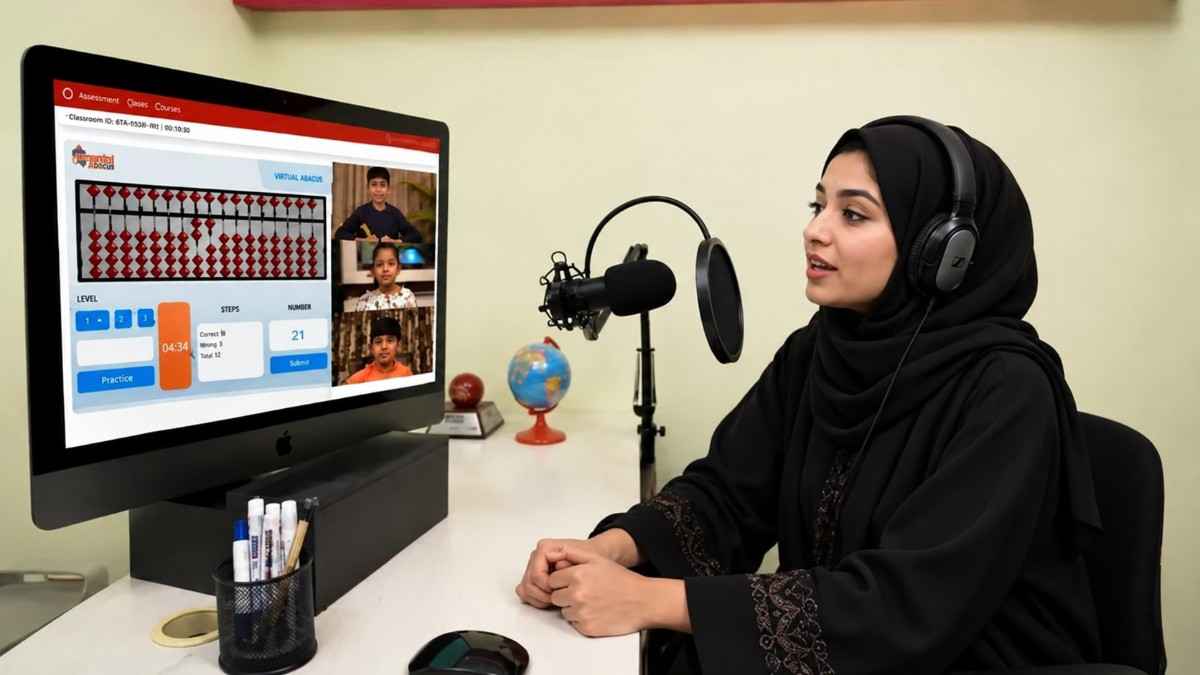
Three students, mid-class, unedited
These are enrolled Mastermind students. Watch the point where the hands go still and the answers keep coming — that is the abacus having moved into the head.
How the programme is structured
A free hour, then a level
Your child sits one live class. The trainer then names a starting level — Level 1 for most, further along for a child who has done abacus at school or elsewhere.
Two hours a week, live
Held on Mastermind’s own portal, with bead races, timed rounds and flash drills instead of a trainer talking at a webcam. Four children to a trainer, no exceptions.
What reaches your door
A physical abacus, the level workbooks and a Parent Handbook. Between classes the student app and the free Virtual Abacus handle five to ten minutes of daily practice.
Ten levels, assessed
Around three months per level, each closing with a graded assessment. Nobody is moved up to keep a batch together.
At home you need: a laptop or tablet, a connection that holds, and a room nobody walks through. Batches run in Gulf Standard Time, with after-school weekday and Saturday–Sunday slots, and they do not stop for the summer. More on the format: how our live online classes work.
Judge it from inside a class, not from a page
An hour of real teaching, free, with your child in front of you.
A school activity slot vs a dedicated programme
Both get called abacus. These are the practical differences worth checking before you commit a term’s fees anywhere.
| Worth asking | Mastermind programme | A typical activity slot |
|---|---|---|
| Children per adult | Four, fixed | Usually a larger group |
| Who teaches | The same certified, company-trained trainer | Varies by provider and term |
| Structure | Ten levels, each assessed before moving on | Often continuous, without levels |
| School holidays | Runs year-round, including summer | Generally follows the school term |
| If you change school | Nothing changes — the class is not tied to a campus | Usually ends with the school |
| Practice material | Abacus, workbooks, Parent Handbook, app | Varies |
| Trying first | A full free hour before paying | Sometimes a taster |
This compares Mastermind’s format with a typical after-school activity slot. Schools and providers differ, and some run excellent programmes — the point is to ask, not to assume.
It does not matter which school your child attends
KHDA-regulated schools in Dubai teach seventeen different curricula between them, to children of well over a hundred nationalities. Two families on the same street can have children in entirely different systems, sitting entirely different assessments.
None of that changes the arithmetic. Every one of those seventeen assumes a child can add, subtract, multiply and divide quickly and correctly, and none of them teaches that fluency directly — they build on it. That is the layer abacus works on, which is why the programme does not need to know your child’s syllabus.
It is also why moving schools, or emirates, or countries, does not interrupt anything. The level your child reached is the level they resume at.
The trainer does not change halfway through
Every class is taken by a certified, company-trained Mastermind trainer — the same one week after week, who knows what your child struggled with last time.
Teaching Abacus isn't just my job—it's my daily source of pride.
Harsha BanthiyaB.Tech and B.Ed
Nothing feels better than shaping young minds and making parents proud.
Amrisha DubeyMBA
Abacus teaching gave me purpose—I feel proud of every small achievement.
Sonali GahoiM.A. (English)
My students' confidence and calculation speed amazed parents within just weeks!
Kanta SarkarPost Graduate
Students' focus and confidence improved so much that parents often thank me!
Ayushi SharmaPost Graduate
Every child's progress gives me deep satisfaction as an Abacus teacher.
Khyati MalhotraMBA
Children aged six to fourteen
- Starting from nothing — counting and following instructions is the entire entry requirement
- Already tried abacus at school — we assess and continue from where they actually are
- Quick at maths and under-stretched — the later levels are genuinely demanding
- Quietly avoiding numbers — a small batch is far less exposing than a full class
What you are actually agreeing to
One live hour of teaching, on the portal enrolled students use, run by a certified trainer. Nobody presents anything to you. Watch what holds your child’s attention and what does not, ask the trainer whatever you like, and take the fees away to think about. Plenty of families do exactly that.
How the hour goes
- Send us your timingsTell us which days suit; we come back with open Gulf Standard Time slots.
- Your child worksA real hour with a certified trainer. Sit in for all of it if you want.
- You get a straight answerWhich level, why, and what that level will ask of your child.
- Then you decideFees come after. Saying no is a normal outcome.
Abacus classes in Dubai — the essentials
- What it is: a dedicated ten-level abacus and mental-maths programme, taught live online to children across Dubai.
- Who it is for: ages six to fourteen, including children who have met abacus already as a school activity.
- Batch size: four children to one certified trainer, every class.
- Commitment per week: two live hours, plus five to ten minutes of daily practice.
- Timings: after-school weekday and Saturday–Sunday slots in Gulf Standard Time.
- Holidays: levels continue year-round and are not tied to a school term or campus.
- To begin: one free hour, fees quoted afterwards, no obligation.
Questions before you book
My child’s school already offers abacus as an after-school activity. Why look elsewhere?
Many Dubai schools do, and for some families that is the right answer — it is convenient and the child is already on site. Worth checking three things before deciding: how many children are in the group, whether the same person teaches it every week, and whether it continues through the school holidays. Our classes are capped at four, taught by the same certified trainer throughout, and run all year.
Do you have a centre somewhere in Dubai?
We teach Dubai families online rather than from a walk-in centre. A certified trainer, four children, your own home — and no Sheikh Zayed Road at six in the evening twice a week.
We live in Mirdif / Silicon Oasis / JVC. Do you serve our area?
Every area, equally. Children join from Mirdif, Al Barsha, Jumeirah, Dubai Marina, Jumeirah Village Circle, Arabian Ranches, Silicon Oasis, International City, Motor City and Deira on exactly the same terms, because there is no building to reach.
What timings do you run for Dubai?
After-school weekday slots and Saturday–Sunday slots, all scheduled in Gulf Standard Time. You choose the day and time that fits your family when you book the free demo.
My child follows a different curriculum from the neighbours’ children. Does that matter?
Not at all. KHDA-regulated schools in Dubai teach seventeen different curricula between them, and every one of them assumes a child can calculate quickly and accurately. Abacus trains that underlying arithmetic, so it sits beneath whichever syllabus your child follows.
We move schools, or countries, fairly often. What happens then?
Nothing changes. The classes are online and the curriculum is the same in all 17 countries we teach in, so a move across Dubai — or out of the UAE altogether — does not interrupt your child’s level.
What age should a child begin?
Between six and fourteen. Six- and seven-year-olds build technique most easily; older children cover the early levels faster but need to be willing to start at the beginning.
How long does the whole thing take, and what are the fees?
Ten levels at roughly three months each, two live hours a week. Fees vary by level and batch, so we quote them after the free demo along with the timings and what arrives in the home kit. Nothing is owed if you decide against it.
How is this different from a private maths tutor?
A tutor generally works on what school set this week. Abacus is a separate skill with its own ten-level progression and its own assessments — it builds the calculation ability that makes school maths easier, rather than repeating it.
Sit in on one class before you decide anything
It is the only way to tell one abacus programme from another, and it costs nothing.