Abacus classes in Chicago — live online mental math for ages 6–14
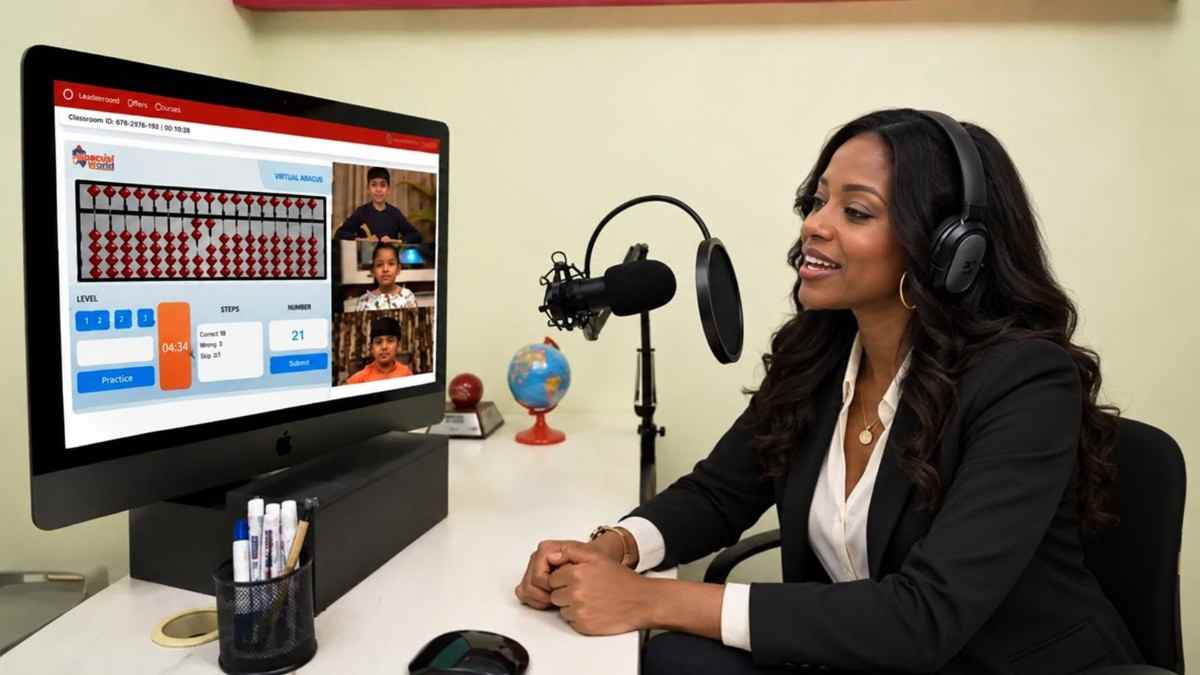
Abacus trains the thing school rarely has time to drill: calculation that is quick, accurate and automatic. A child works a real frame, then pictures it, and ends up doing mental math at a speed that surprises most parents — with the kind of focus an abacus sum simply demands. Our classes are live, held on Mastermind’s own gamified portal rather than a generic video call, and a certified teacher works with four students at once. Timed drills, bead races, the same teacher week after week: a classroom, delivered to your house.
Book a free demo class
No fees. No obligation. See your child learn live.
Or message us directly on WhatsApp.
There is nothing here to apply for
Chicago families become fluent in applications early. Chicago Public Schools runs more than six hundred schools across seventy-seven community areas, with neighbourhood, magnet, charter and selective enrollment options layered on top of each other. By 2019, fewer than one in four CPS freshmen were enrolling in their assigned neighbourhood high school. Children here grow up inside a system of forms, test dates, rankings and results days.
Some of that is genuinely good — choice matters, and plenty of families end up somewhere they would never have been zoned for. But it does mean a child can reach eleven having already been measured against a cut-off more than once.
This is not one of those. There is a free hour, and at the end of it a teacher says which of the ten levels your child should start at. That is a placement, not a screen. Nobody fails it, nobody is put on a waiting list, and there is no date by which you have to have decided anything.
Six things the program is built to produce
The bead frame is used hard for the early levels and then deliberately withdrawn. These are what should remain.
The physical method
Bead and finger movement, corrected live in Level 1 where it is still easy to change.
Arithmetic without the tool
The frame is taken away in the middle levels and the computation carries on internally.
Sustained attention
The exercise breaks the instant focus does, which makes it self-correcting practice.
Holding an image steady
Keeping a changing bead picture in mind is working memory under another name.
Correct, then quick
Both graded at every level, so pace never arrives on top of a shaky method.
Progress a child can see
Ten levels, each one finished and marked. For some children that is the first time effort has been visible.
Parents tend to describe these somewhere in the later levels. Whether a child gets there comes down to showing up and to a few honest minutes of practice a day. Read the research on abacus training →
Where the levels lead
Enrolled Mastermind students at Levels 3, 5 and 10. Every one of them started at Level 1 after an ordinary free hour.
What actually happens, in order
You book an hour
No form beyond your contact details, no documents, no sample work. Pick a Central Time slot that suits the household.
A teacher places your child
Level 1 for most; further in for a child who has used an abacus before. The placement is explained to you rather than handed over as a number.
Two live hours a week
On Mastermind’s own portal, with timed rounds and bead races. Four children, one certified teacher, the same one each week. The kit — abacus, workbooks, Parent Handbook — arrives by mail, and the student app and free Virtual Abacus cover short daily practice.
Ten levels, each one marked
About three months apiece, closing with a graded assessment. A child repeats a level rather than being carried along with the batch.
What is needed at home: a laptop or tablet, a connection that holds and a quiet corner. The program runs year round, so summer does not cut a level in half. More on the format: how our live online classes work.
Nothing to prepare for, nothing to qualify for
Book an hour and find out where your child would begin.
What you are not being asked to do
Most of what follows is normal elsewhere in a Chicago childhood. None of it applies here.
| Usually required | Here | What it normally means |
|---|---|---|
| An application | None | Forms, documents, a portal login |
| An entrance test | None — the free hour places, it does not screen | A score that decides access |
| A deadline | None — batches form on levels, not terms | Miss the window, wait a year |
| A lottery or waitlist | Neither | An outcome outside your control |
| A catchment or boundary | Any neighbourhood, same class | Your address decides your options |
| Prior ability | Counting and following instructions | A level to reach before you qualify |
| Commitment up front | A free hour first, fees after | Payment before you have seen anything |
The right-hand column describes what applications and selective processes generally involve, not any particular school or provider. Plenty of them are worth the effort — the point is simply that this is not one of them.
Neighborhood, magnet, charter, selective, private
Across seventy-seven community areas and hundreds of schools, Chicago children end up in an unusually wide spread of settings, and the math sequence differs between them more than parents expect.
It changes nothing here, because this program is attached to no school and teaches no curriculum. What it builds is the computation all of those settings assume is already in place — and once that is quick and reliable, a child’s attention moves to the reasoning, which is where the difficulty actually lives.
It also means changing school, or moving from the city to the suburbs, leaves your child’s level exactly where it was.
A certified teacher, allocated rather than competed for
Four children to one teacher, the same teacher week after week. No ranking, no preference list, no result day.
Teaching Abacus isn't just my job—it's my daily source of pride.
Harsha BanthiyaB.Tech and B.Ed
Nothing feels better than shaping young minds and making parents proud.
Amrisha DubeyMBA
Abacus teaching gave me purpose—I feel proud of every small achievement.
Sonali GahoiM.A. (English)
My students' confidence and calculation speed amazed parents within just weeks!
Kanta SarkarPost Graduate
Students' focus and confidence improved so much that parents often thank me!
Ayushi SharmaPost Graduate
Every child's progress gives me deep satisfaction as an Abacus teacher.
Khyati MalhotraMBA
Any child between six and fourteen
- Struggling with math — starts at bead technique, not at grade-level content
- Well ahead and bored — the upper levels are demanding by design
- Tired of being assessed — the only assessment here is the one that places them
- Already did some abacus — placed at the level they reached, not restarted
One hour, and then a decision that is yours
A real class on the portal enrolled students use, taught by a certified teacher, with your child doing the work. There is no preparation to do beforehand and nothing to bring. Afterwards you get a level, an explanation, and the fees — in that order, and with no date attached to deciding.
How the hour goes
- Choose an hourA Central Time slot that works once school is done.
- Your child sits the classA full hour with a certified teacher. Watch all of it.
- They are placedA level, and the reasoning behind it, explained to you.
- You take your timeFees come last. No deadline, no obligation.
Abacus classes in Chicago — the essentials
- What it is: a ten-level abacus and mental math program taught live online across Chicago and the suburbs.
- Entry: no application, no entrance test, no lottery, no deadline — a free hour and a placement.
- Ages: six to fourteen, beginners and children continuing from elsewhere.
- Class size: four children to one certified teacher, every session.
- Timings: after-school weekday and weekend slots in Central Time.
- Schools: independent of every district and school type.
- To start: one free hour, fees afterwards, no obligation.
Mostly about what is required
Is there an entrance test or an application?
Neither. There is a free class, at the end of which a teacher tells you which of the ten levels your child should start at. That is a placement, not a screen - nobody is turned away on the strength of it, and there is no score to beat.
Is there a deadline or an enrollment window?
No. A child joins as soon as they have been placed, because batches are built around levels instead of around terms. Nothing here runs on an application calendar.
What if my child is behind in math?
Then they start at Level 1, which is where most children start anyway. The program begins at bead technique rather than at grade-level content, so a child who finds school math discouraging is not walking into more of the same.
Which parts of Chicago do you cover?
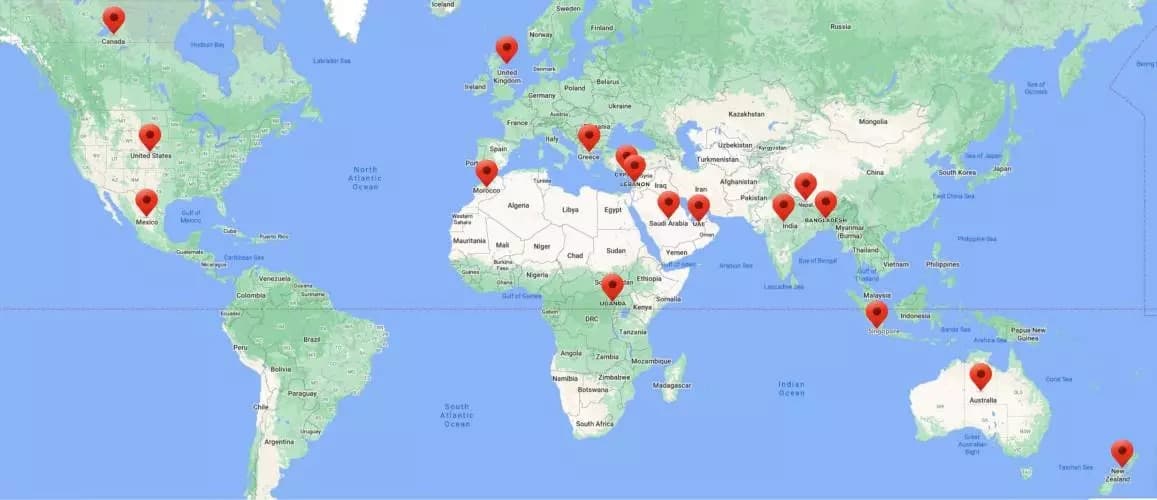
All of them, identically - the North Side, the South Side, the West Side, the Loop and the surrounding suburbs. Children join from Lincoln Square, Albany Park, Beverly, Hyde Park, Edison Park, Evanston, Naperville, Schaumburg and Oak Park on the same terms, because there is no building involved.
What times are available?
After-school weekday slots and weekend slots, in Central Time. You pick the day and hour when you book the free class.
My child is in a selective enrollment, magnet or charter school. Does that change anything?
No. This program is tied to no school and no district. It teaches no curriculum at all - it builds the computation that every curriculum assumes a child already has, whichever school they attend.
Do we get the same teacher throughout?
Yes, and there are four children in the class. Over a ten-level program that consistency does more than any individual lesson does.
How long does the whole thing take?
Ten levels, each running about a quarter, at two live hours a week. Every level closes with a graded assessment, and a child repeats rather than being pushed up to keep a batch intact.
Which ages, and what are the fees?
Six to fourteen. Fees depend on the level and the batch and are shared after the free class, along with the Central Time slots on offer. There is no obligation.
An hour, with nothing riding on it
No test, no ranking, no results day. Just a class, a level, and a decision you make in your own time.