Abacus classes in California — live online mental math for ages 6–14
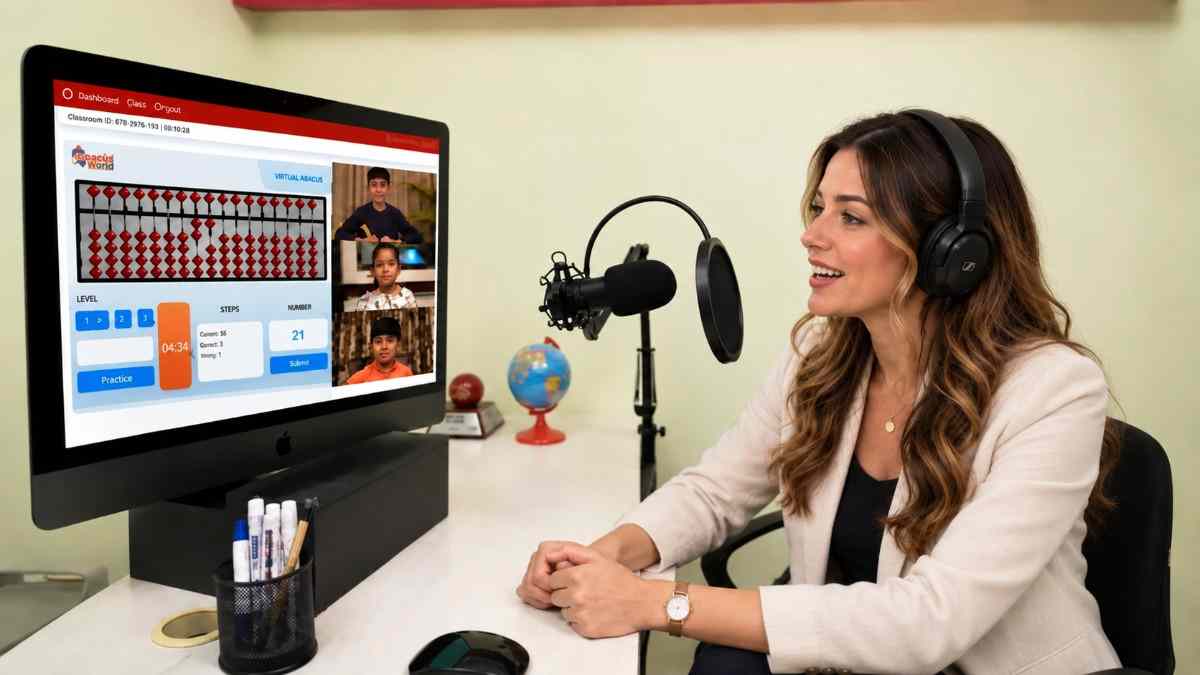
The point of abacus is what a child can do without it. They learn the beads first, then learn to see them, and soon they are solving mentally the sums that would otherwise need a pencil — faster, and far surer of the answer. Concentration usually improves alongside it, because the method collapses the moment attention wanders. Classes are live on our own gamified abacus portal, purpose-built for the subject and nothing like a standard video call. A certified teacher takes four students at a time, so it stays a real classroom, at home.
Book a free demo class
No fees. No obligation. See your child learn live.
Or message us directly on WhatsApp.
The homework stopped looking familiar
California adopted a new mathematics framework in 2023, and it puts real weight on conceptual understanding, open-ended tasks and the connections between ideas rather than on drilling procedures. Whatever you think of that, it has an obvious side effect: a great many parents open a fourth-grade worksheet and recognise almost nothing. When the framework was adopted, a State Board member said openly that the approach is harder for parents who themselves learned maths as a set of algorithms.
This page is not an argument about that. Schools are doing something considered, and it is not our place to second-guess it. But there is a practical consequence worth naming: a parent who cannot follow the method cannot help, and helping is most of what a parent can offer at this age.
Abacus is the part that has not moved. Beads work the way they worked when you were at school. An answer is right or it is not. You can sit across the table during practice and know exactly what is happening — and for a lot of California families, that is the first time in years that has been true of maths.
Six things, all of them visible from where you sit
Part of the point of this method is that progress is not a mystery to the adult watching it.
A method you can watch
Beads move or they do not. There is no interpretation required to see whether your child has it.
Computation without the frame
Partway through, the abacus is put away and the same sums continue mentally.
Concentration you can see
A child who has drifted gets the answer wrong immediately, which makes progress legible.
Visual working memory
Holding a changing bead picture in mind, practised until it is unremarkable.
Accuracy before speed
Graded in that order at every level, which is the order most parents would choose.
Something you can share
Ten or fifteen minutes at a kitchen table where you both know what is going on.
Parents generally describe these across the levels; how far a child gets depends on attendance and short daily practice. Read the research on abacus training →
You will be able to tell what is happening
Enrolled Mastermind students at three levels. No specialist vocabulary required to see the difference between the first clip and the last.
The week, and your part in it
A free hour, and a level
One live class, then the teacher names a starting level and explains why. A child who has used an abacus before is assessed rather than restarted.
Two live hours a week, Pacific Time
Timed rounds and bead races on Mastermind’s own portal, four children to one certified teacher. You are welcome to sit in on any of them.
Five to ten minutes with you
An abacus, workbooks and a Parent Handbook arrive at home; the student app and free Virtual Abacus cover the days between. This is the part parents tend to enjoy.
Ten levels, each assessed
About three months apiece, with a graded result you will understand without interpretation.
Requirements: a laptop or tablet, a steady connection and somewhere quiet. Levels run year round rather than by term. More on the format: how our live online classes work.
Sit in on an hour and see if you can follow it
That is a fair test, it costs nothing, and most parents pass it easily.
Helping with homework versus practising a skill
Both matter. They ask completely different things of a parent, and it is worth being clear which one you are signing up for.
| At the kitchen table | Abacus practice | School math homework |
|---|---|---|
| What you need to know | How the beads move — explained in the handbook | The method currently being taught |
| How long it takes | Five to ten minutes | However long it takes |
| Telling right from wrong | Immediate and unambiguous | Sometimes the method matters as much as the answer |
| If you get stuck | Ask the teacher next class | Often nobody to ask that evening |
| Your role | Company and a timer | Interpreter, sometimes |
| How progress shows | A level completed and graded | A report card, months later |
Nothing here is a criticism of how math is taught in California schools. Teachers are working to a considered framework; this is simply about which of the two evening tasks a parent can realistically support.
Whatever is spoken at home, arithmetic reads the same
Roughly forty percent of California students are multilingual learners. In a lot of households the language of homework is not the language of the dinner table, which adds a second layer to an already unfamiliar worksheet.
Bead work sidesteps that. The movements are physical and the numbers are numbers; there is nothing to translate. Classes themselves are taught in English, so a child needs enough to follow a live teacher — but the subject itself makes no linguistic demands beyond that.
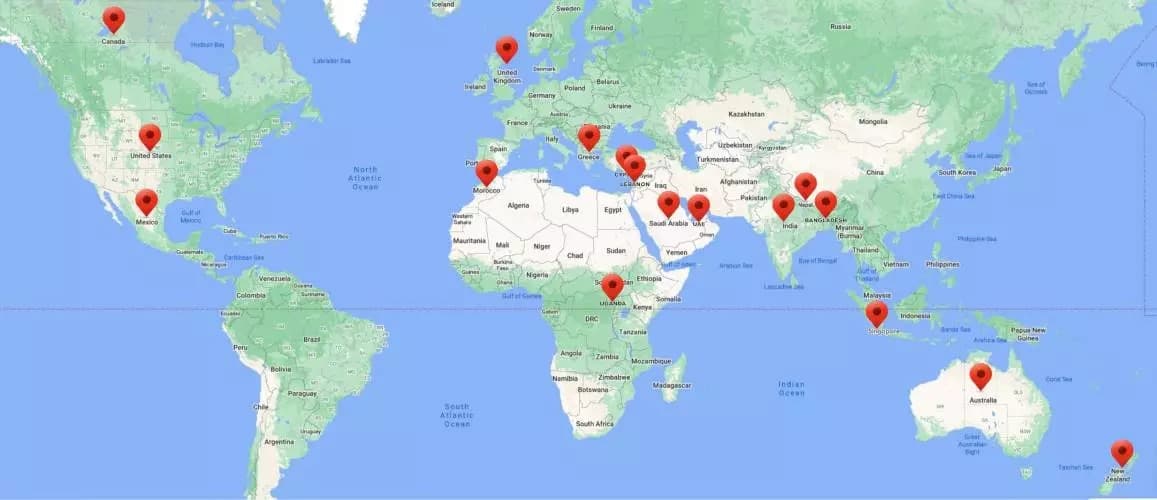
It also means the program travels. A family moving between districts, out of state or abroad keeps the same level, the same batch and the same teacher.
Certified teachers you can actually talk to
Four children to one teacher, the same one each week, and a parent is welcome in any class. Questions get answered by the person who taught the lesson.
Teaching Abacus isn't just my job—it's my daily source of pride.
Harsha BanthiyaB.Tech and B.Ed
Nothing feels better than shaping young minds and making parents proud.
Amrisha DubeyMBA
Abacus teaching gave me purpose—I feel proud of every small achievement.
Sonali GahoiM.A. (English)
My students' confidence and calculation speed amazed parents within just weeks!
Kanta SarkarPost Graduate
Students' focus and confidence improved so much that parents often thank me!
Ayushi SharmaPost Graduate
Every child's progress gives me deep satisfaction as an Abacus teacher.
Khyati MalhotraMBA
Six to fourteen, at any level of confidence
- Parents who feel shut out of the homework — the most common reason families here get in touch
- Children who are slow rather than stuck — they understand it, they just take too long
- Beginners — counting and following instructions is the whole prerequisite
- Strong students with time on their hands — the upper levels are demanding by design
Stay for the whole hour
A real class with a certified teacher, on the portal enrolled students use. Watch your child, but also watch yourself: can you follow what is being taught? If the answer is yes, you have found something you can be useful in for the next couple of years. The fees come afterwards.
How the hour goes
- Choose a Pacific Time slotWhichever evenings or weekend hours suit the household.
- A full live classSixty minutes with a certified teacher. Stay in the room.
- A placement, explainedWhich level, why that one, and what it will ask of your child.
- Then you decideFees at the end, with no deadline attached.
Abacus classes in California — the essentials
- What it is: a ten-level abacus and mental math program taught live online across California.
- Why parents choose it here: it is arithmetic they can follow and help with, whatever the current classroom method looks like.
- Relationship to school: teaches no state standards and rehearses no test — it builds the computation underneath both.
- Language: classes are in English; the bead work itself needs no translation.
- Ages: six to fourteen.
- Class size: four children to one certified teacher.
- Timings: after-school and weekend slots in Pacific Time.
- To start: one free hour, fees afterwards, no obligation.
Often about themselves, not their child
I cannot follow my child's math homework any more. Is that normal?
It is extremely common, and it is not a comment on you. California's 2023 mathematics framework puts weight on conceptual understanding and connected 'big ideas', which is a different emphasis from the procedures most adults were taught. A State Board member said as much when it was adopted. Abacus is the part that has not changed - beads move the same way they did decades ago.
Does that mean this conflicts with what school is doing?
No, and we would not want it to. The framework is about how mathematical thinking is taught; this builds the computation underneath it, which every approach assumes is already reliable. It supports the classroom rather than arguing with it.
Can I actually help at home, or is it another thing I supervise without understanding?
You can follow all of it. The Parent Handbook explains each level, the bead movements are visible, and an answer is either right or it is not. Most parents find the daily five to ten minutes is the first math practice in years they can sit through without feeling lost.
We speak another language at home. Does that matter?
Around forty percent of California students are multilingual learners, so this is the norm rather than the exception here. Arithmetic itself is language-neutral and the bead work needs no translation. Classes are taught in English, so a child needs enough to follow a live teacher.
Which parts of California do you cover?
All of it - the Bay Area, Greater Los Angeles, San Diego, Sacramento, the Central Valley and the Inland Empire, on identical terms. There is no location to reach.
Which slots are open to us?
After-school and weekend slots in Pacific Time. You choose the day and hour when you book the free class.
Is this aligned to the state framework or to CAASPP?
Neither, deliberately. The program has its own ten-level curriculum and its own assessments and teaches no state standards. It rehearses no test.
Which ages, and how long does the whole thing take?
Six to fourteen. The program is ten levels long, each taking about a quarter, at two live hours a week, and every level ends in a graded assessment.
What are the fees?
They depend on the level your child is placed at and the batch, and we share them after the free class. There is no obligation to continue.
Math you can sit down next to again
One free class, a placement you will understand, and a decision taken in your own time.